Clinical
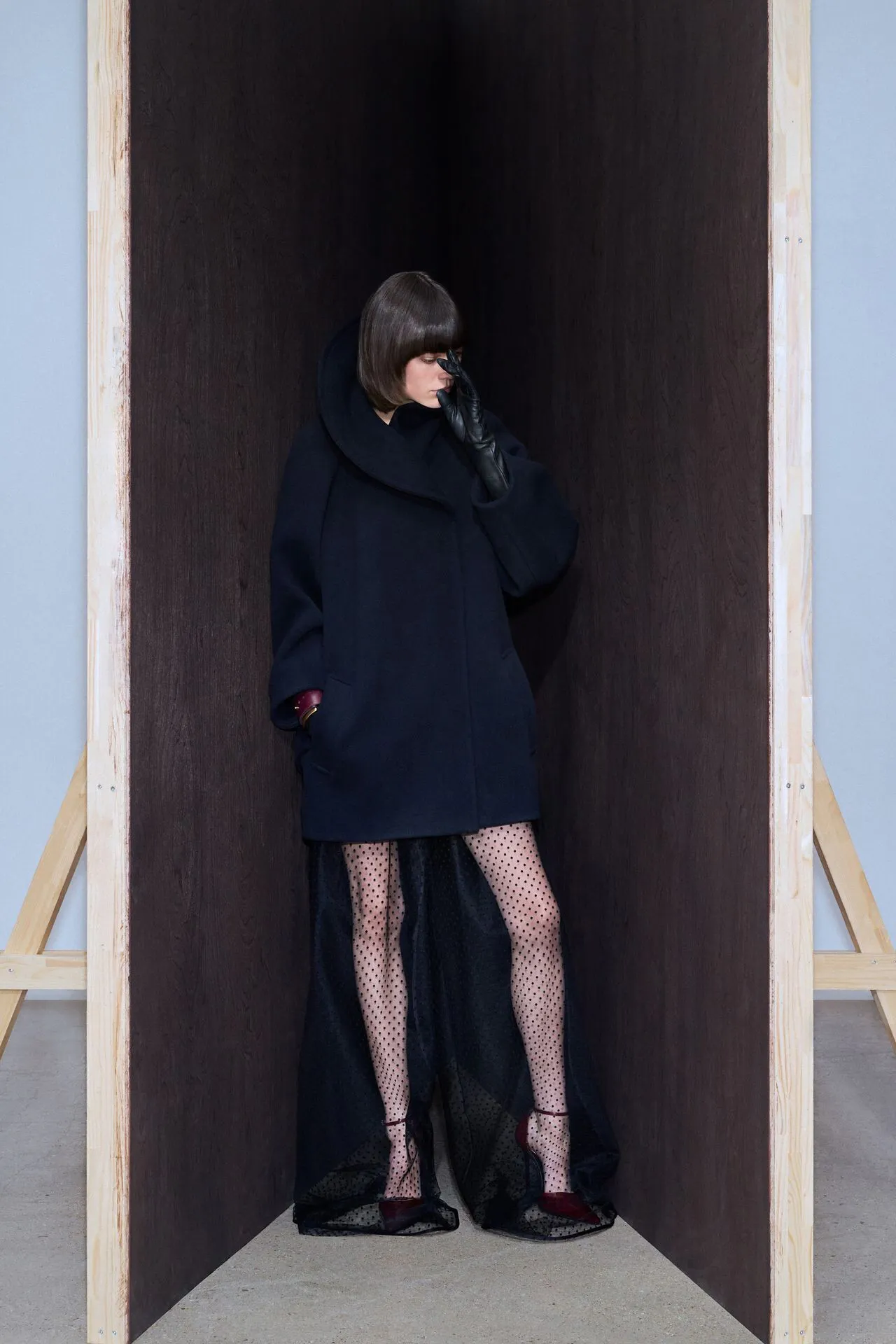
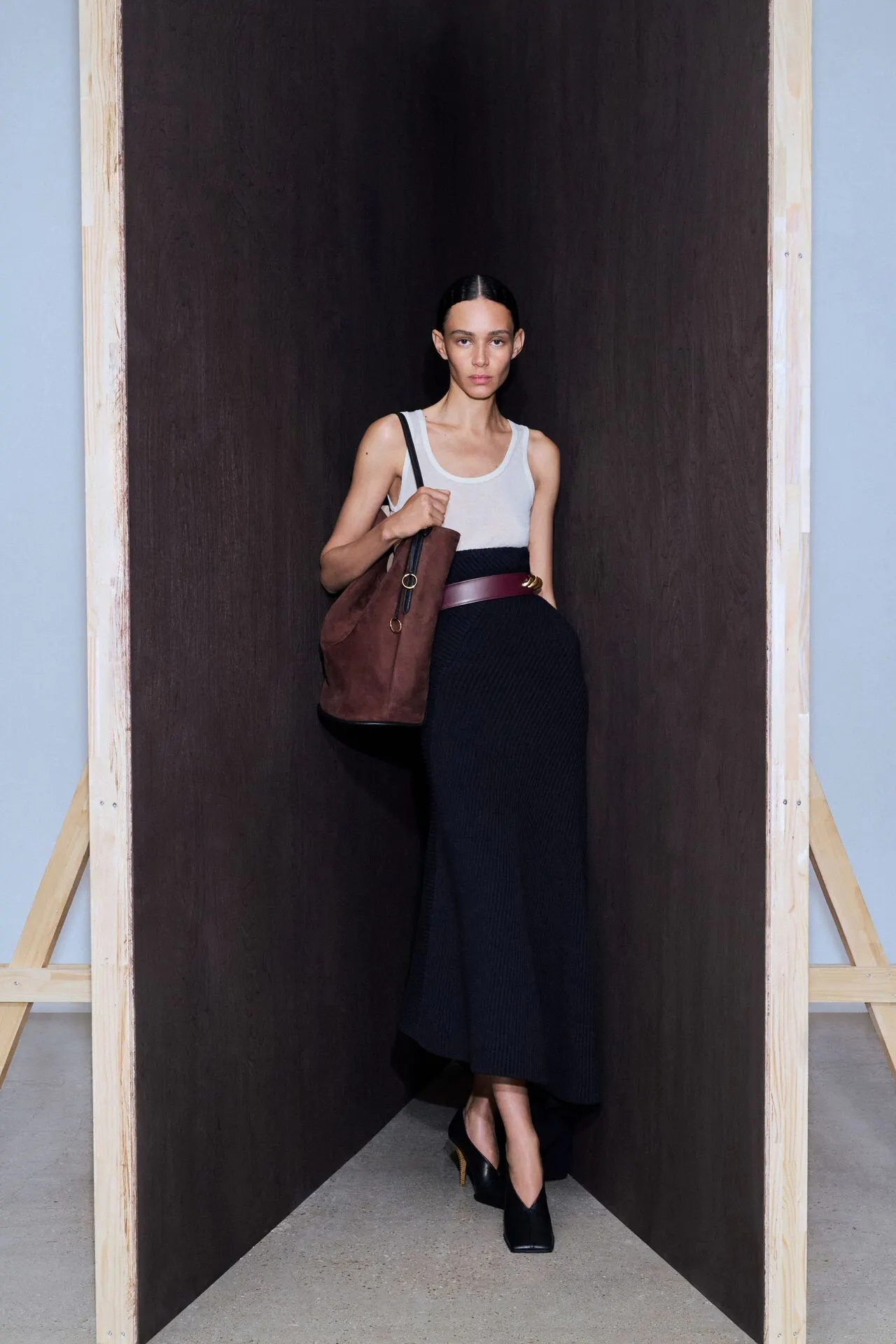
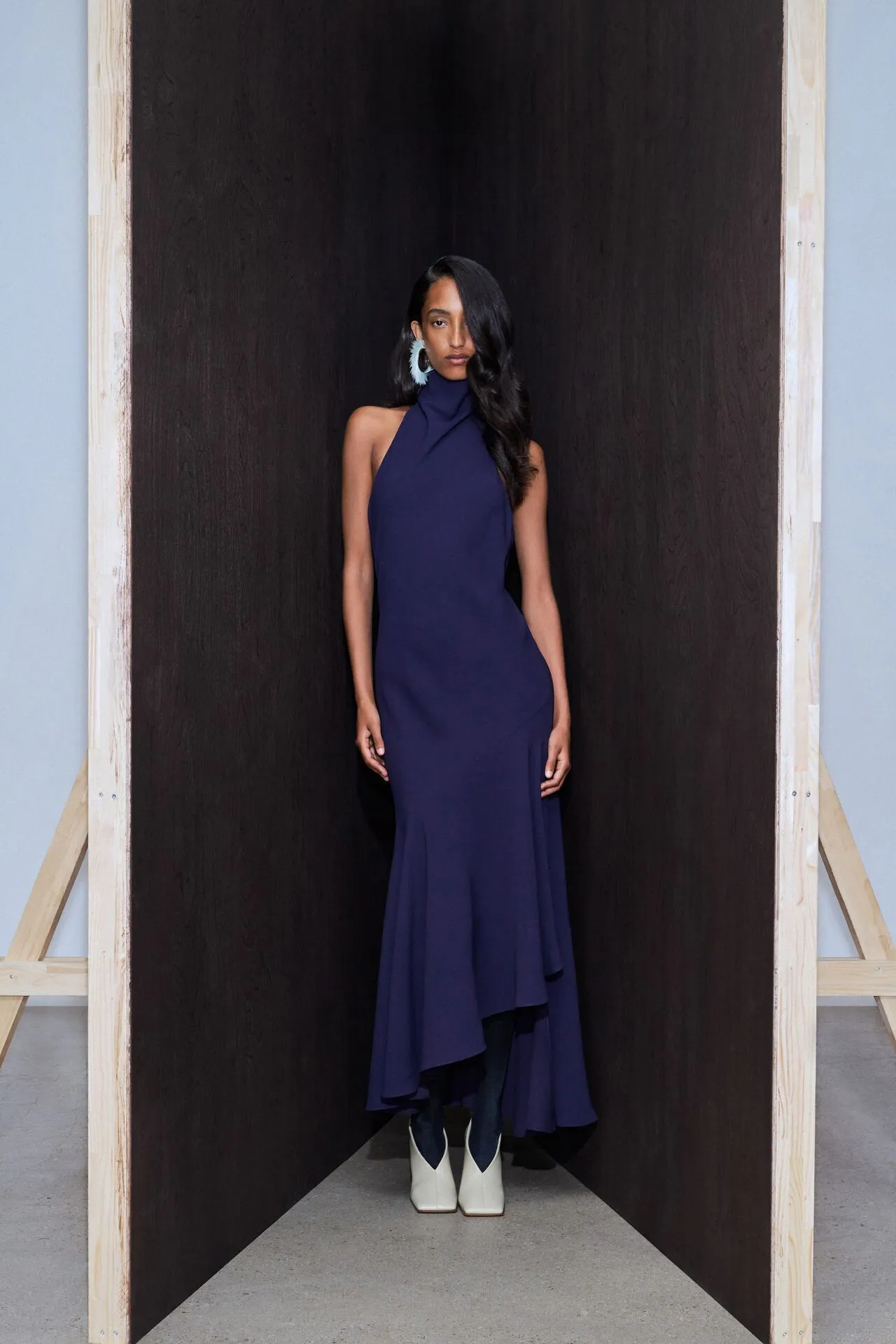
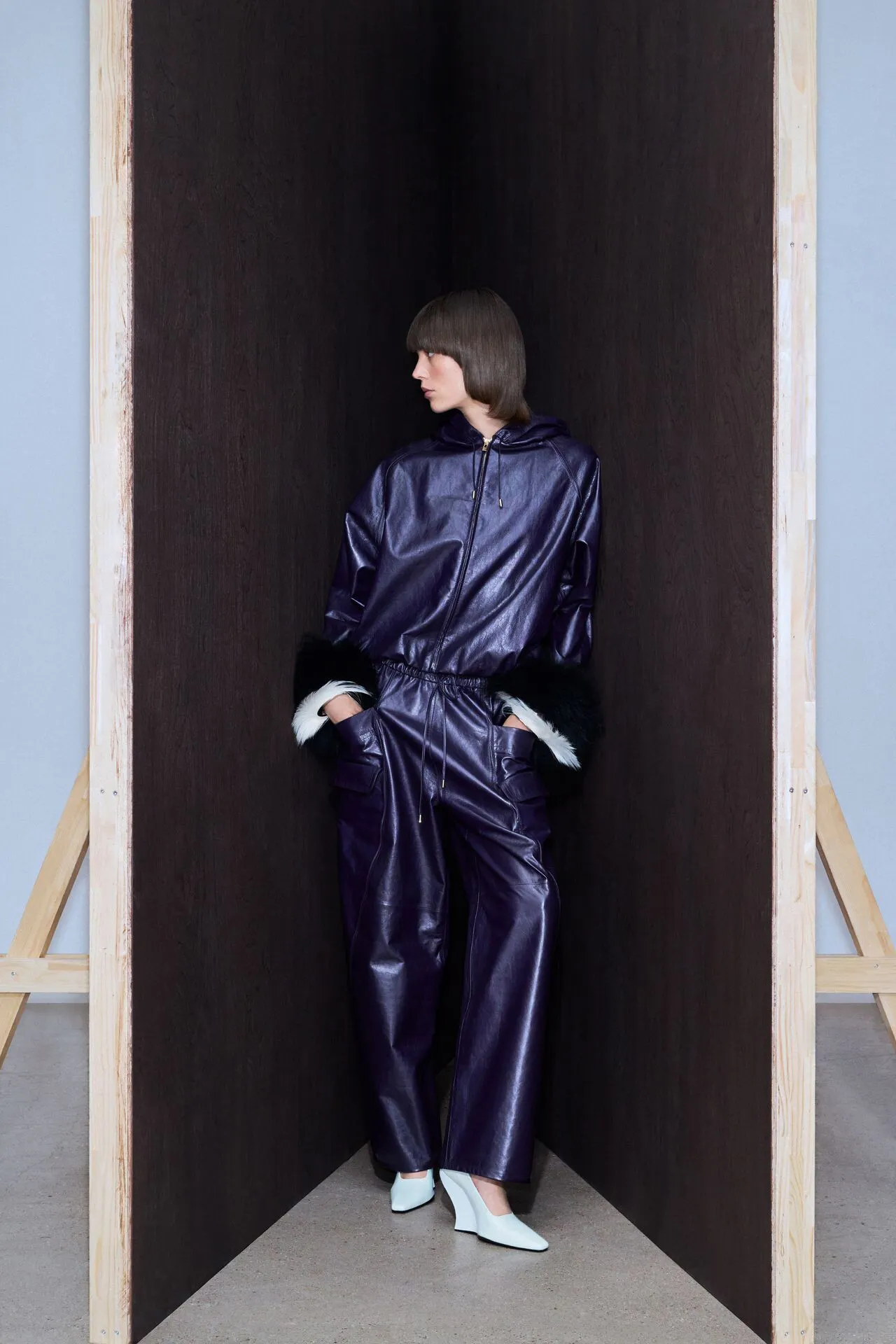
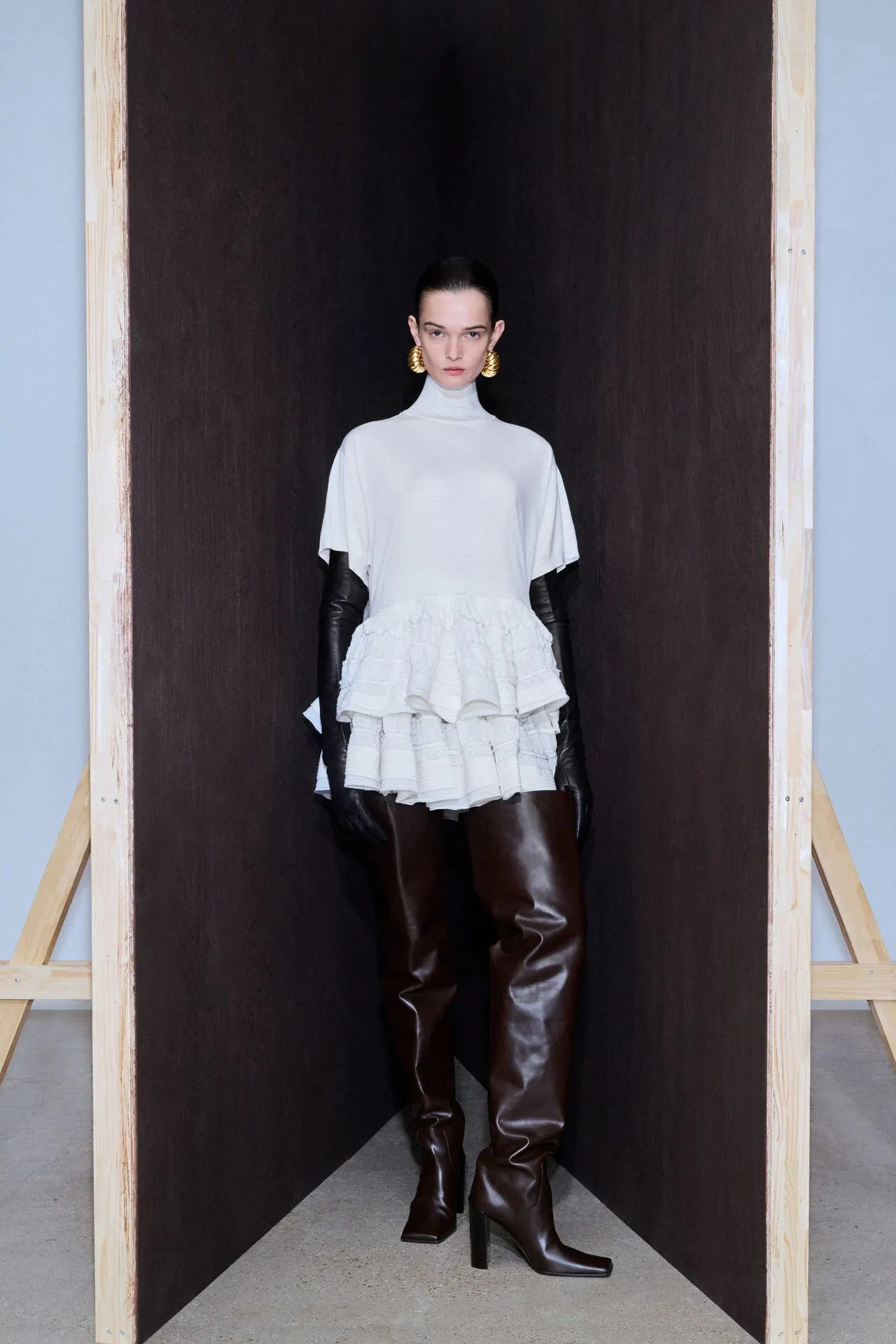
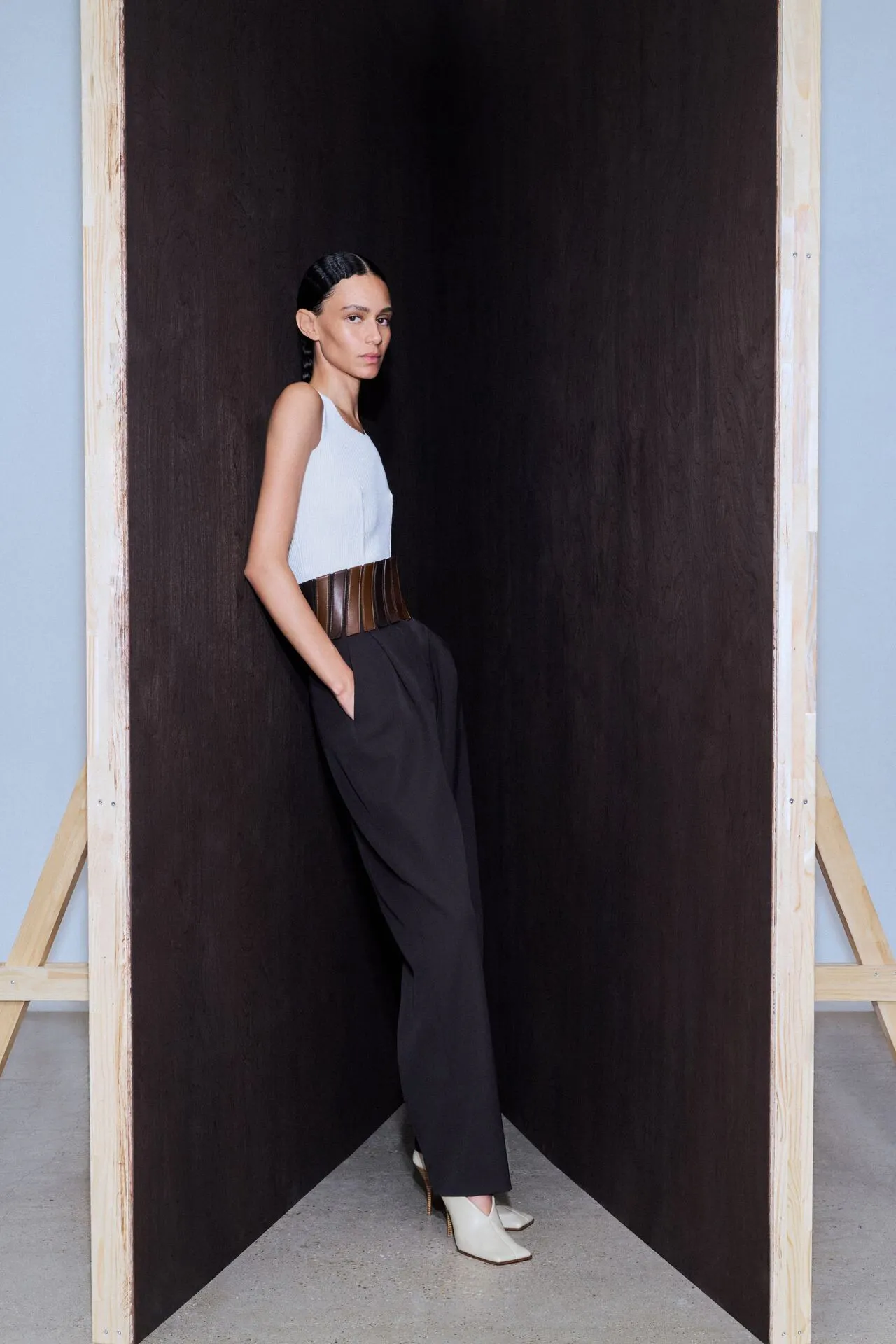
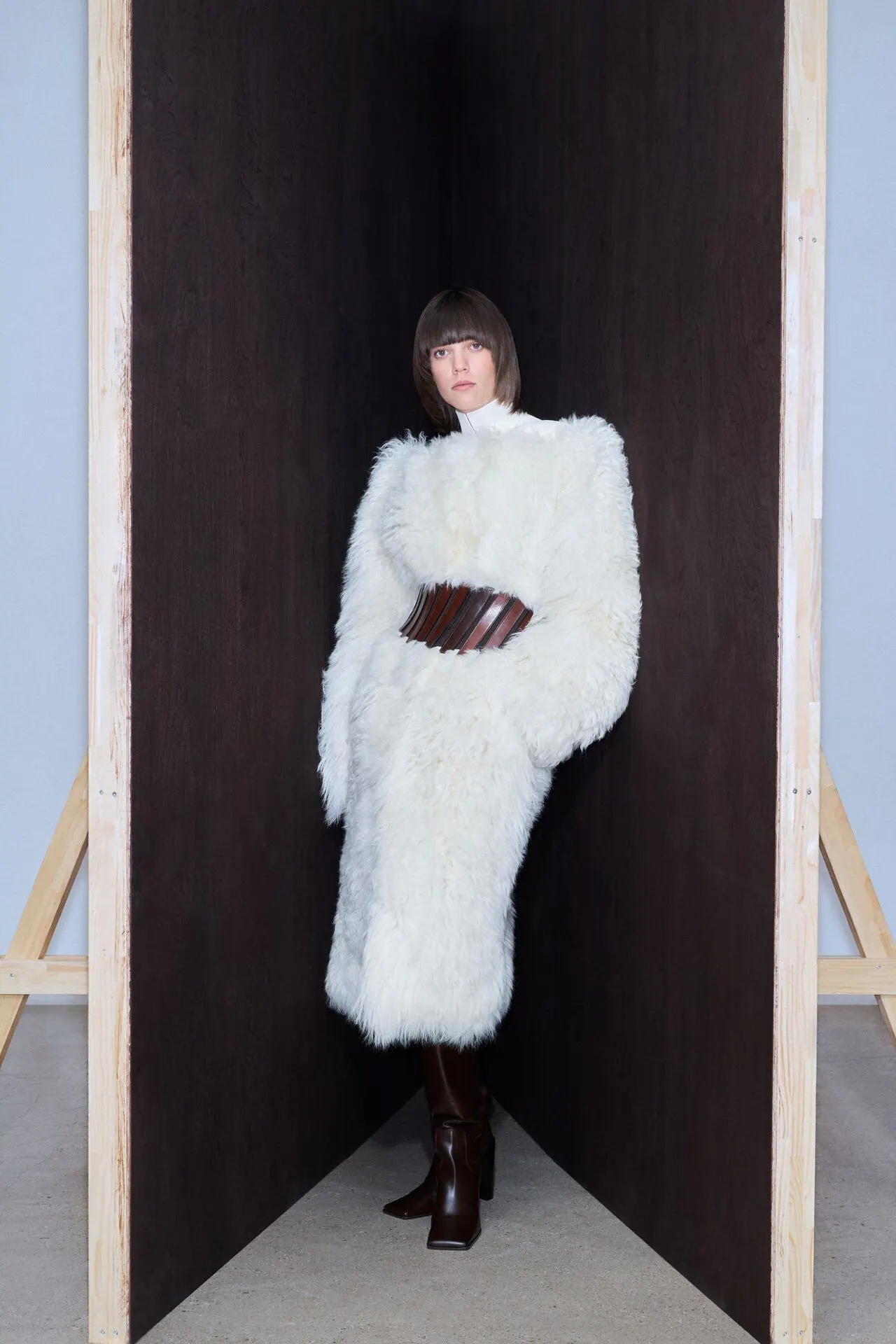
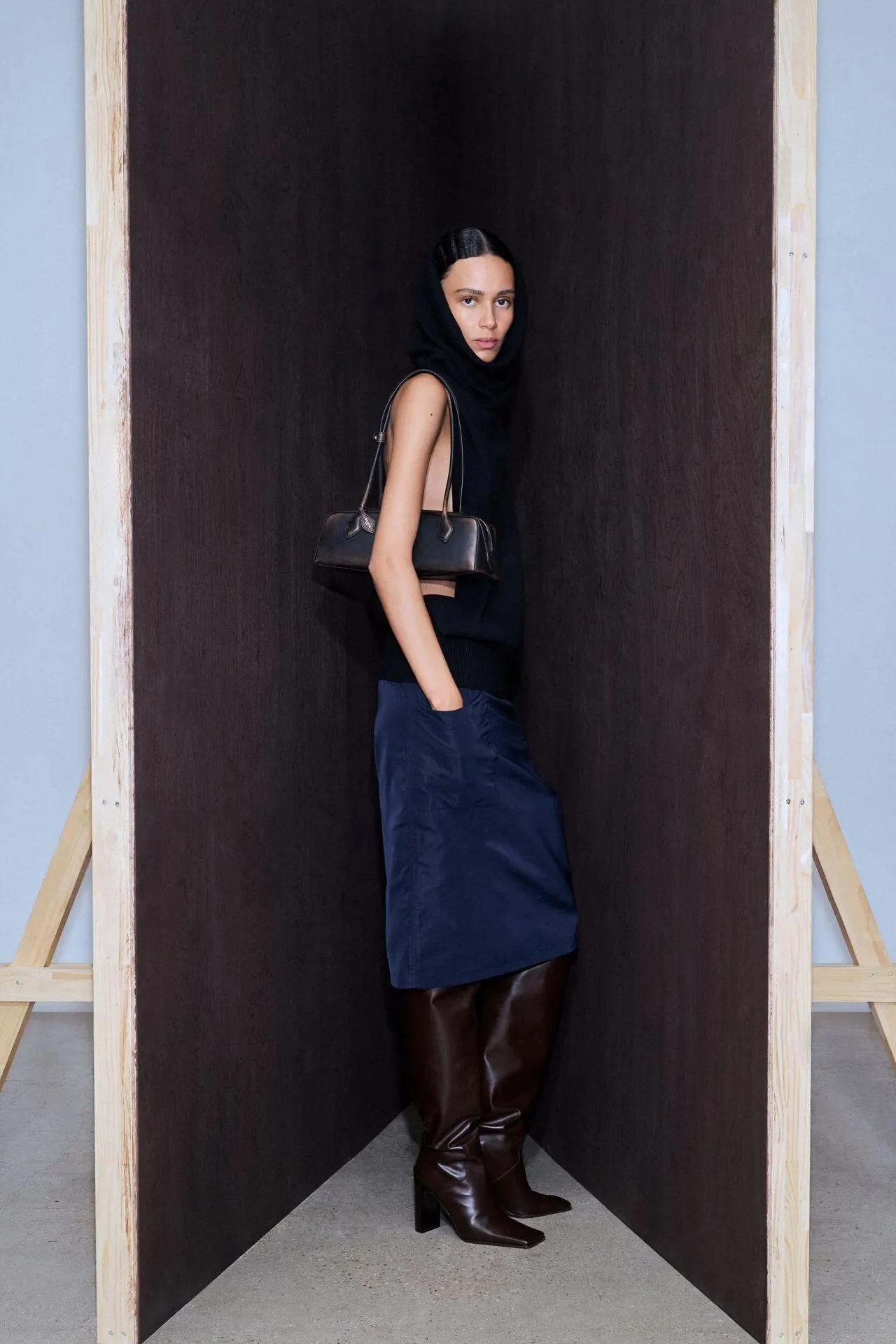
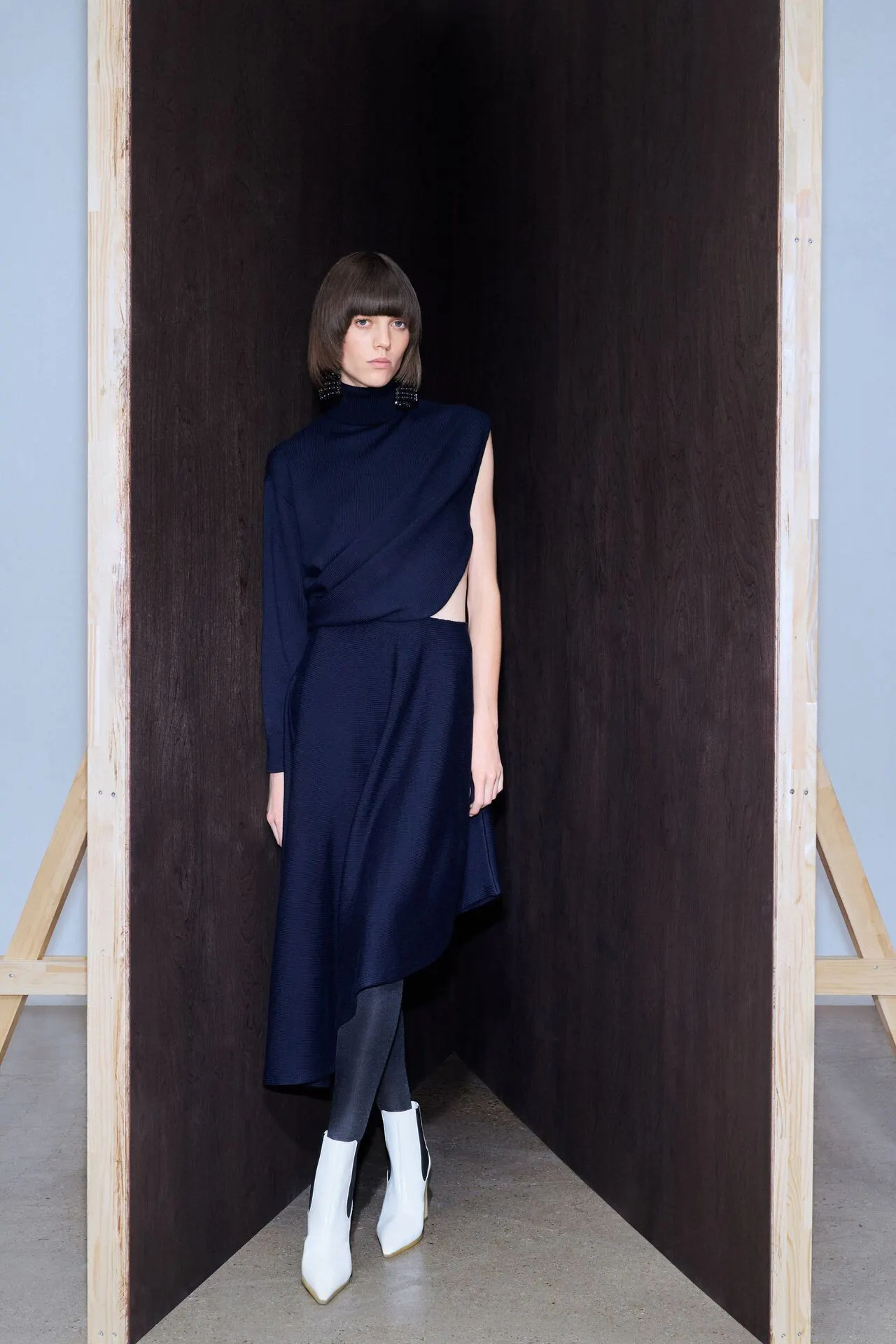
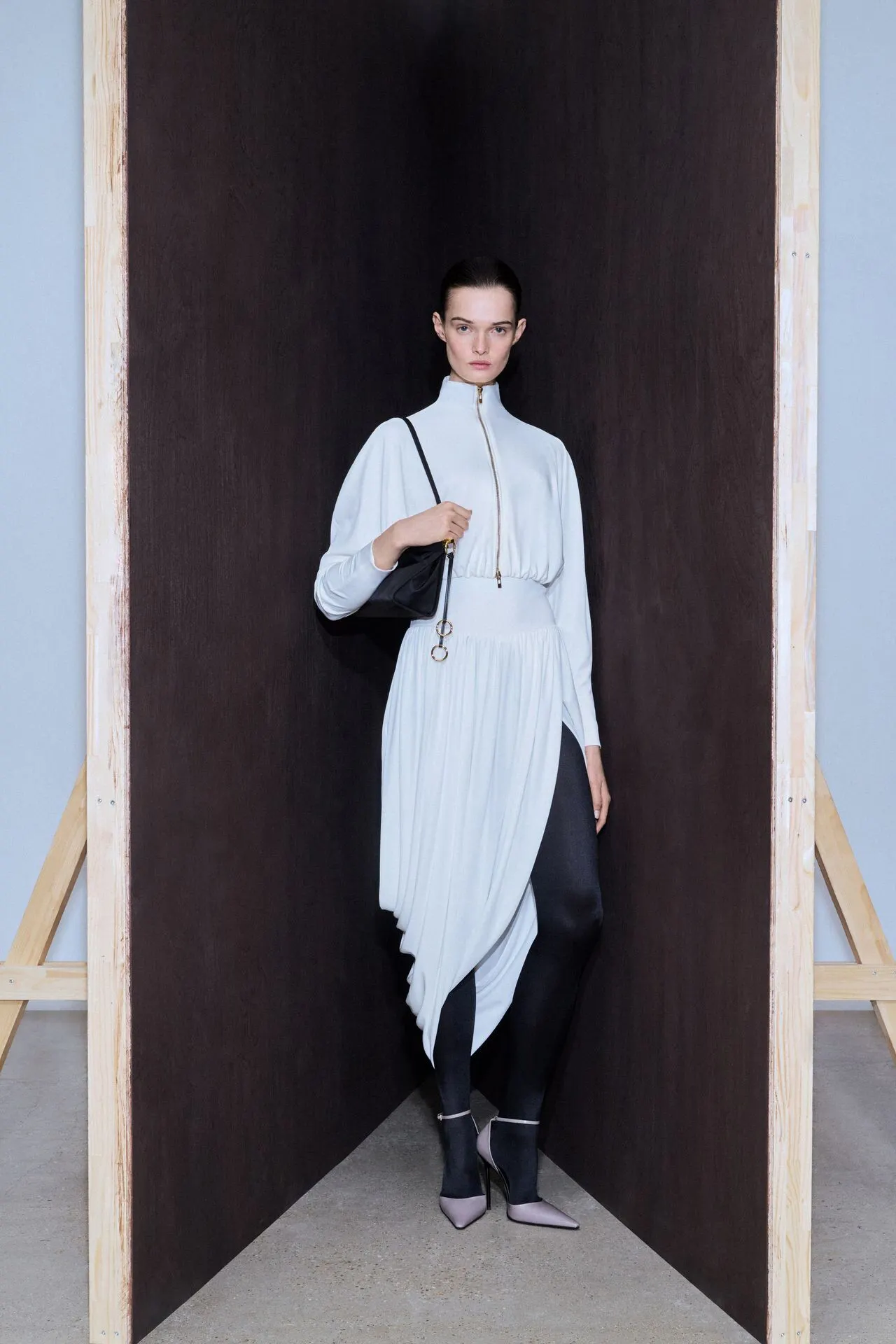
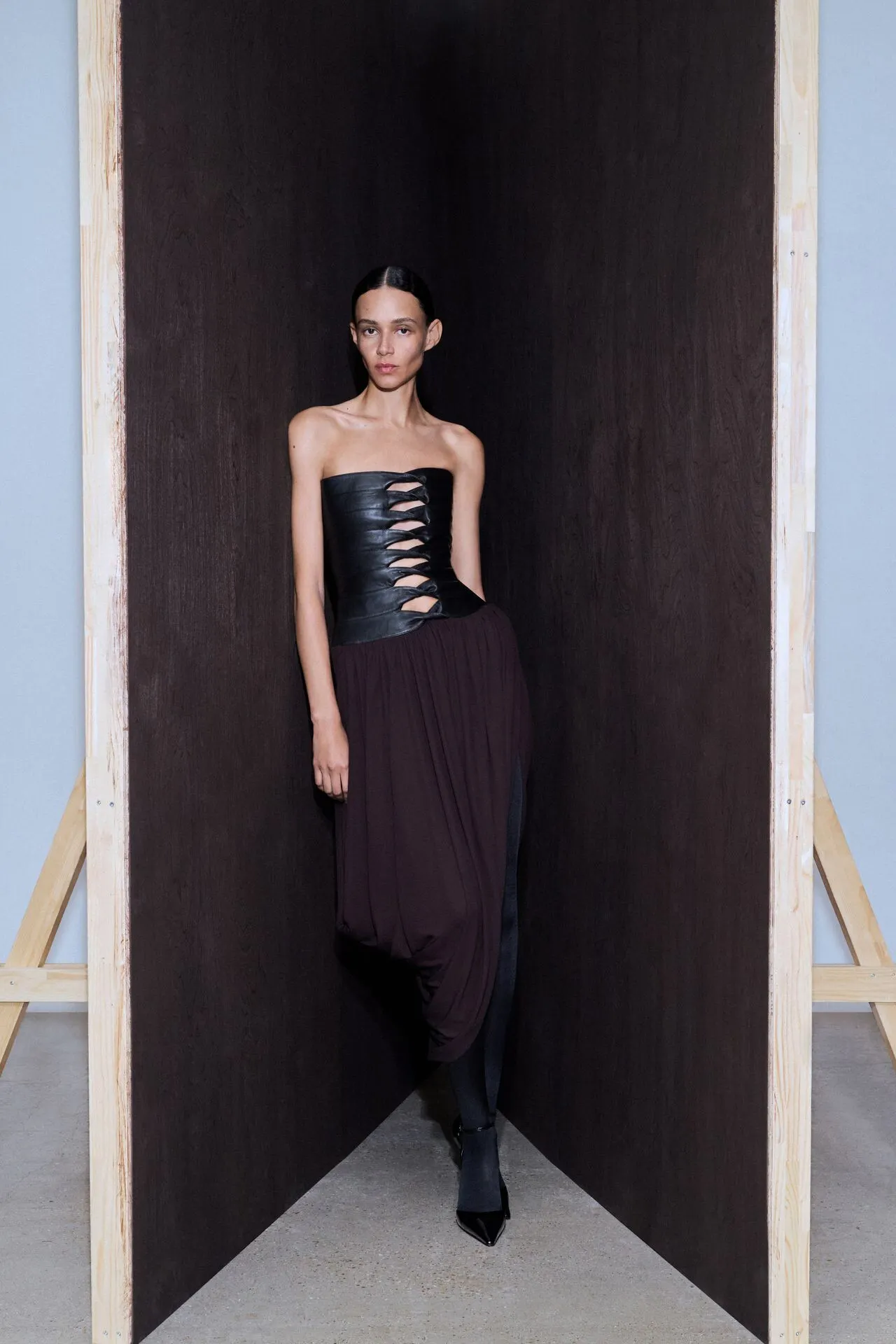
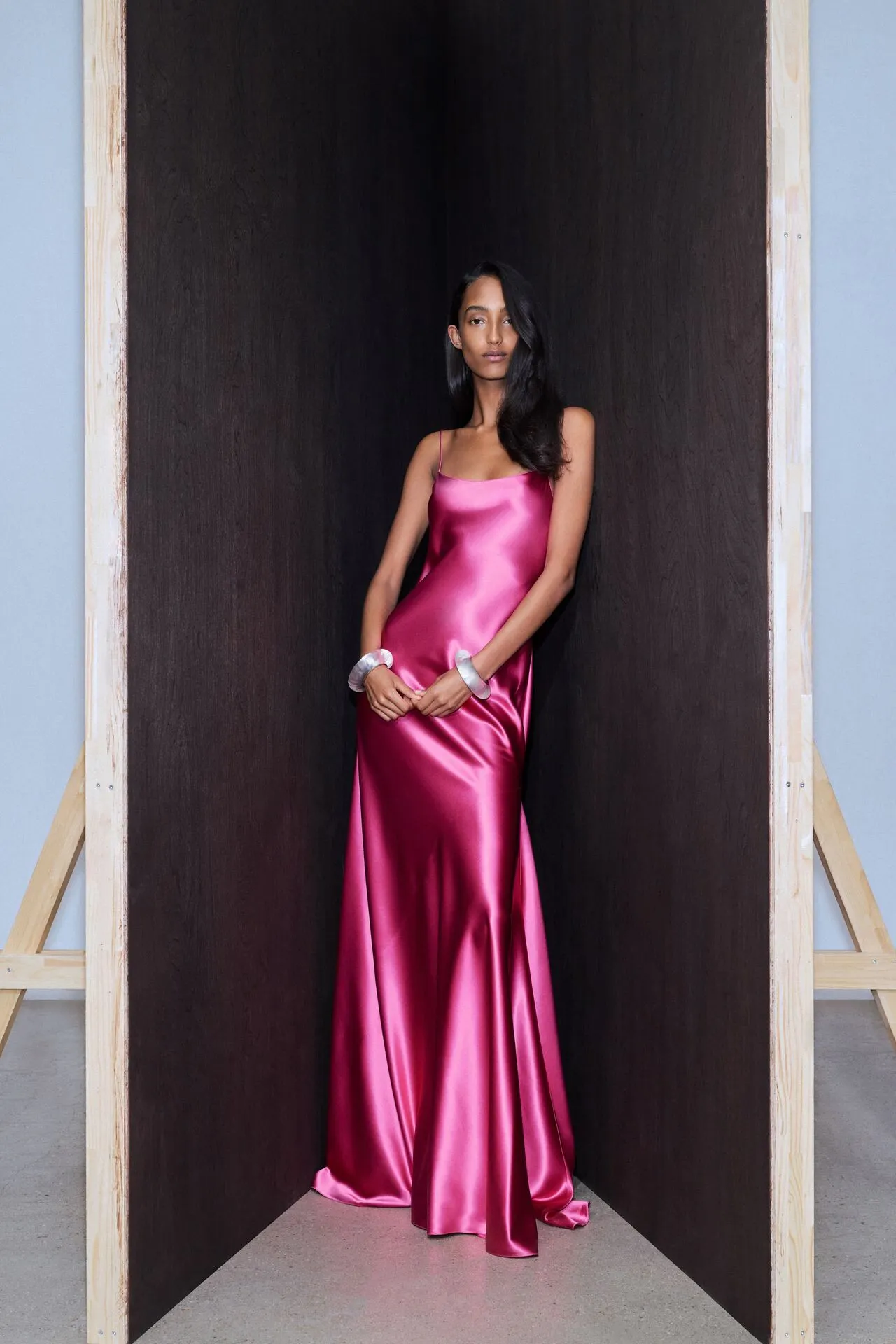
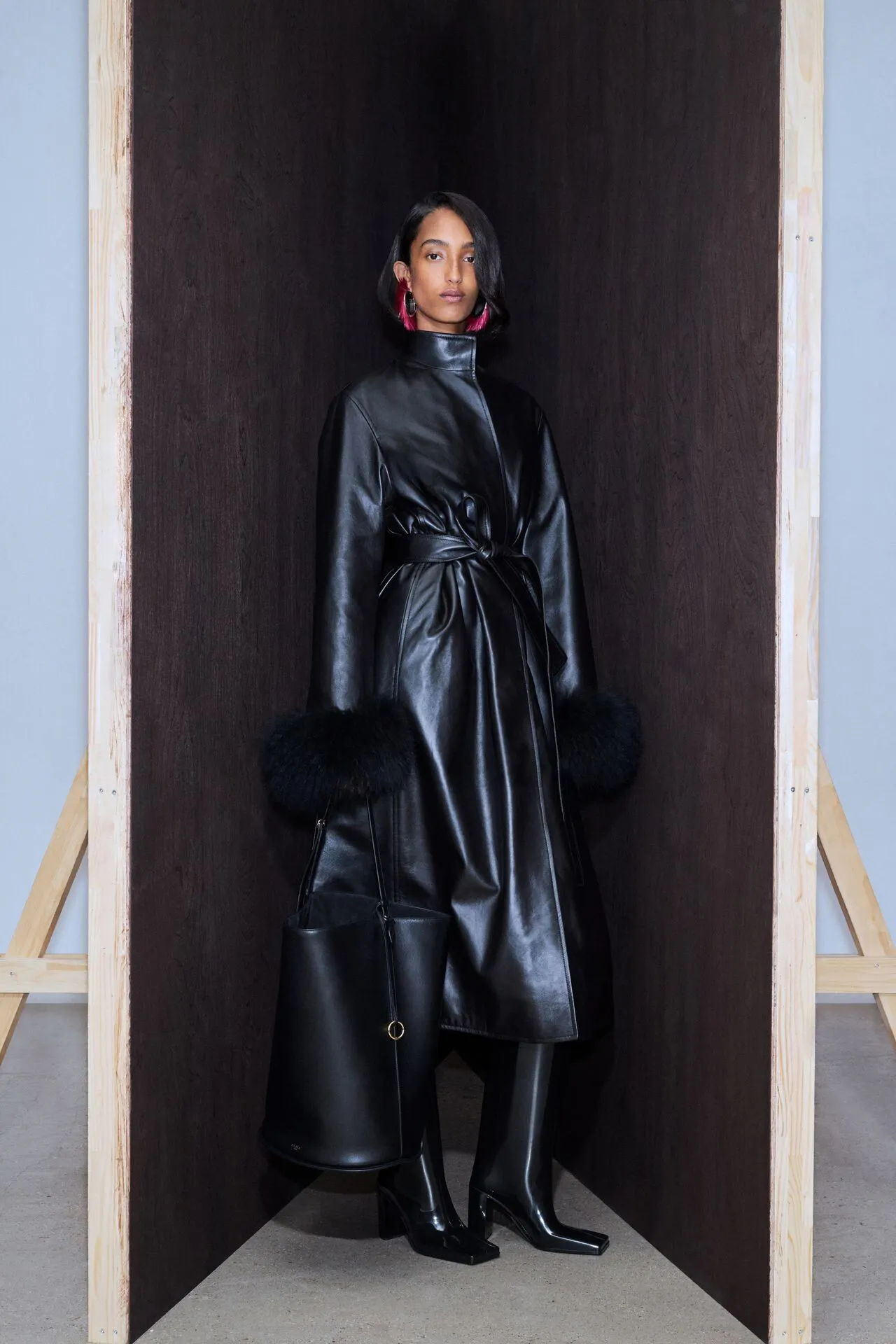
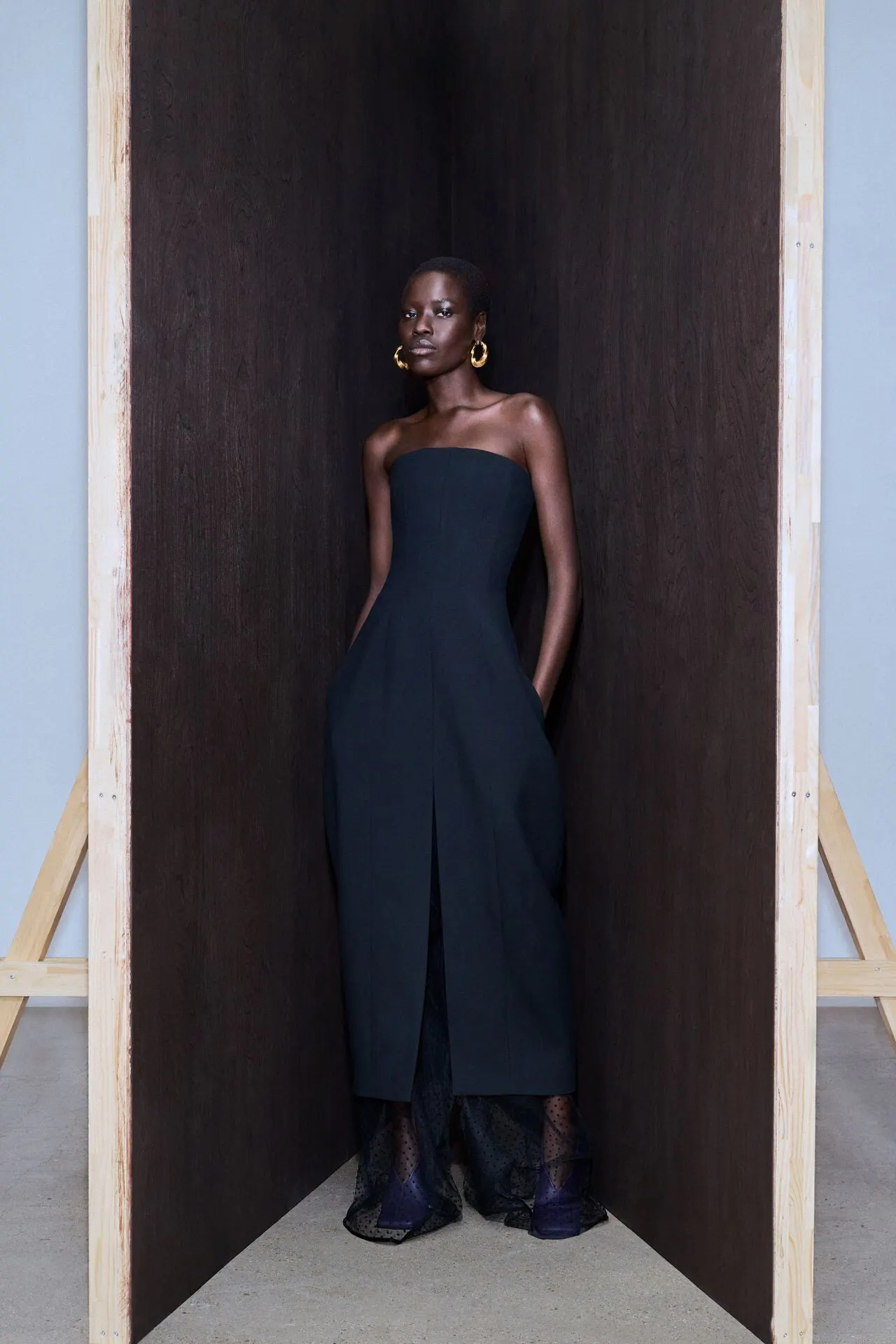
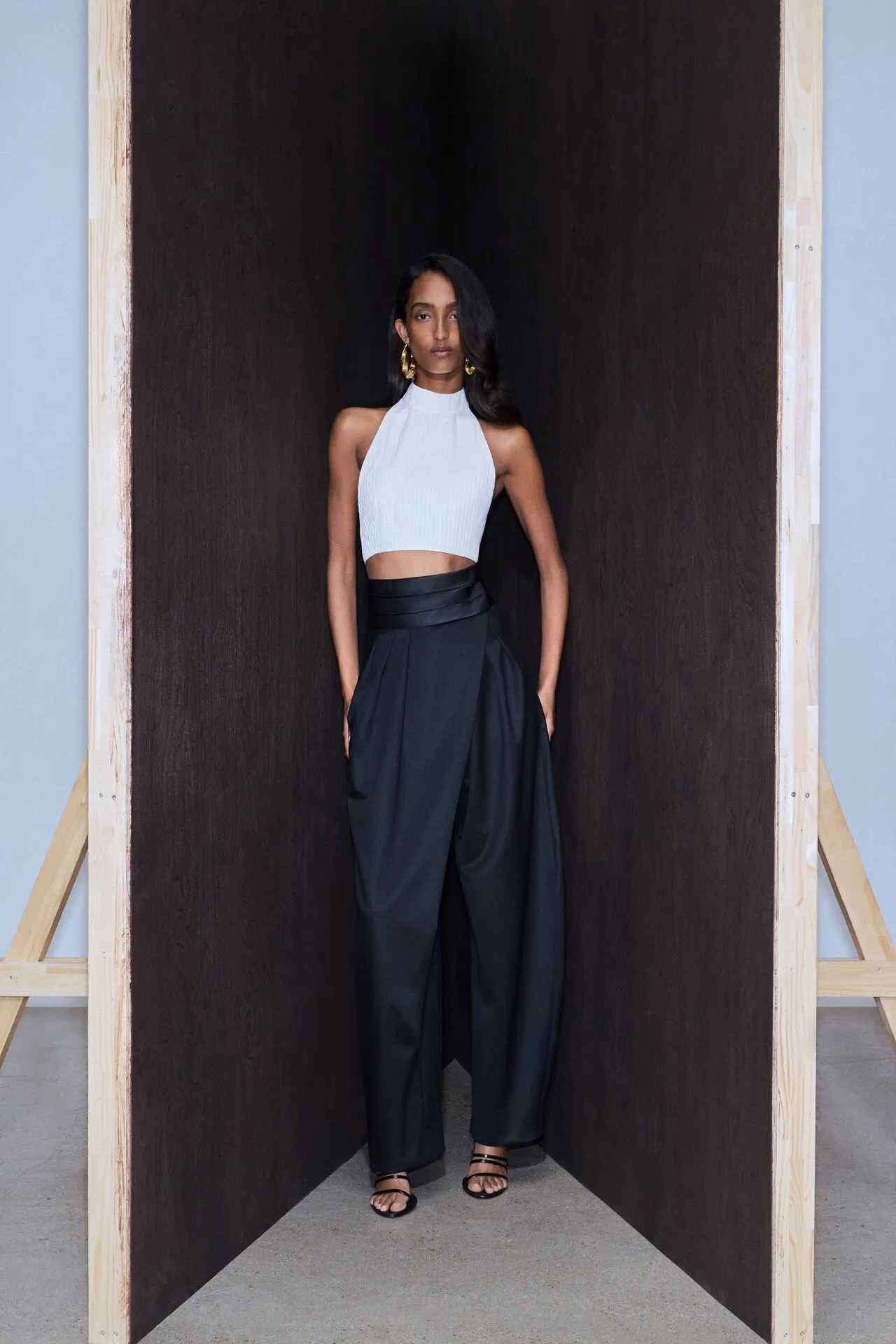
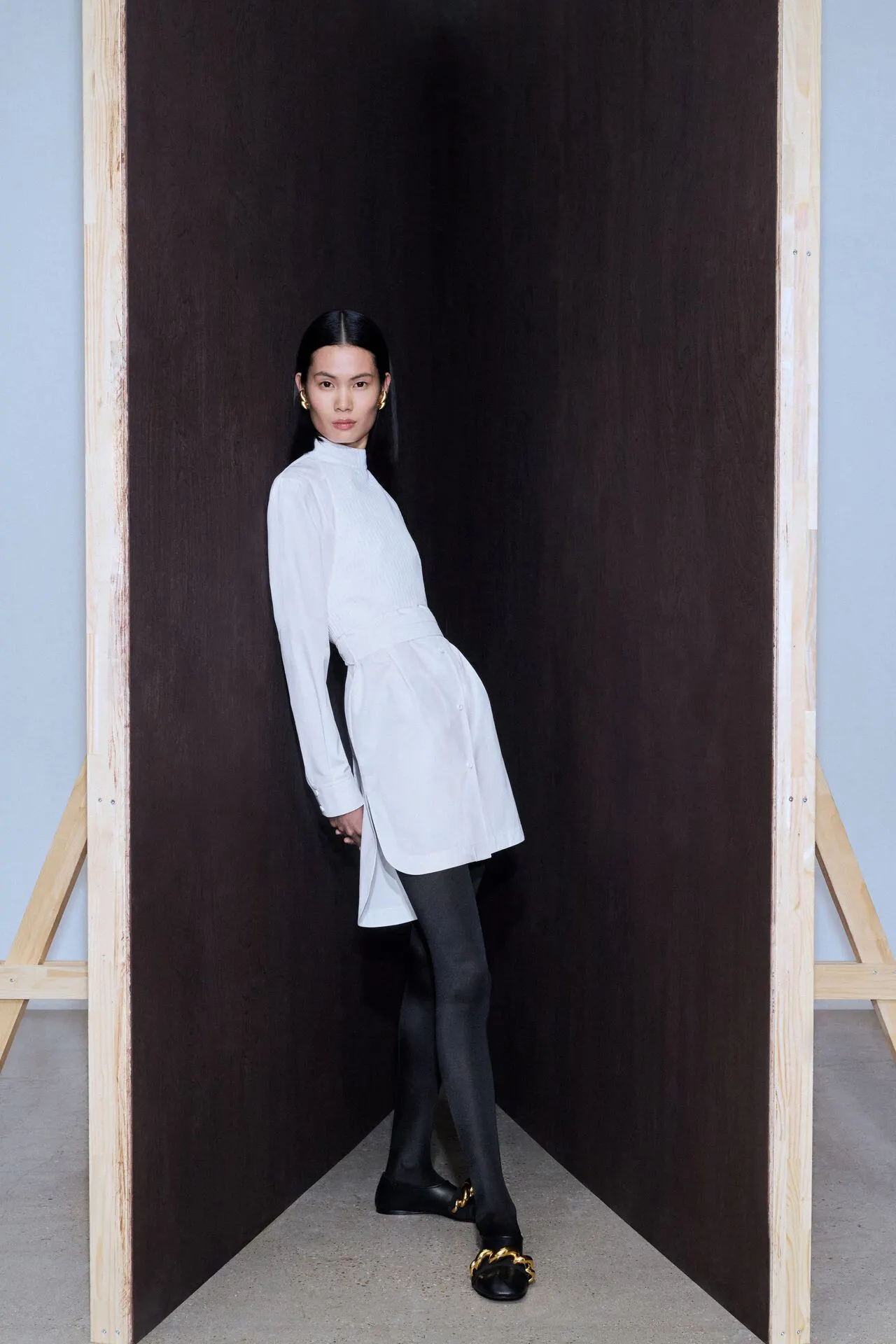
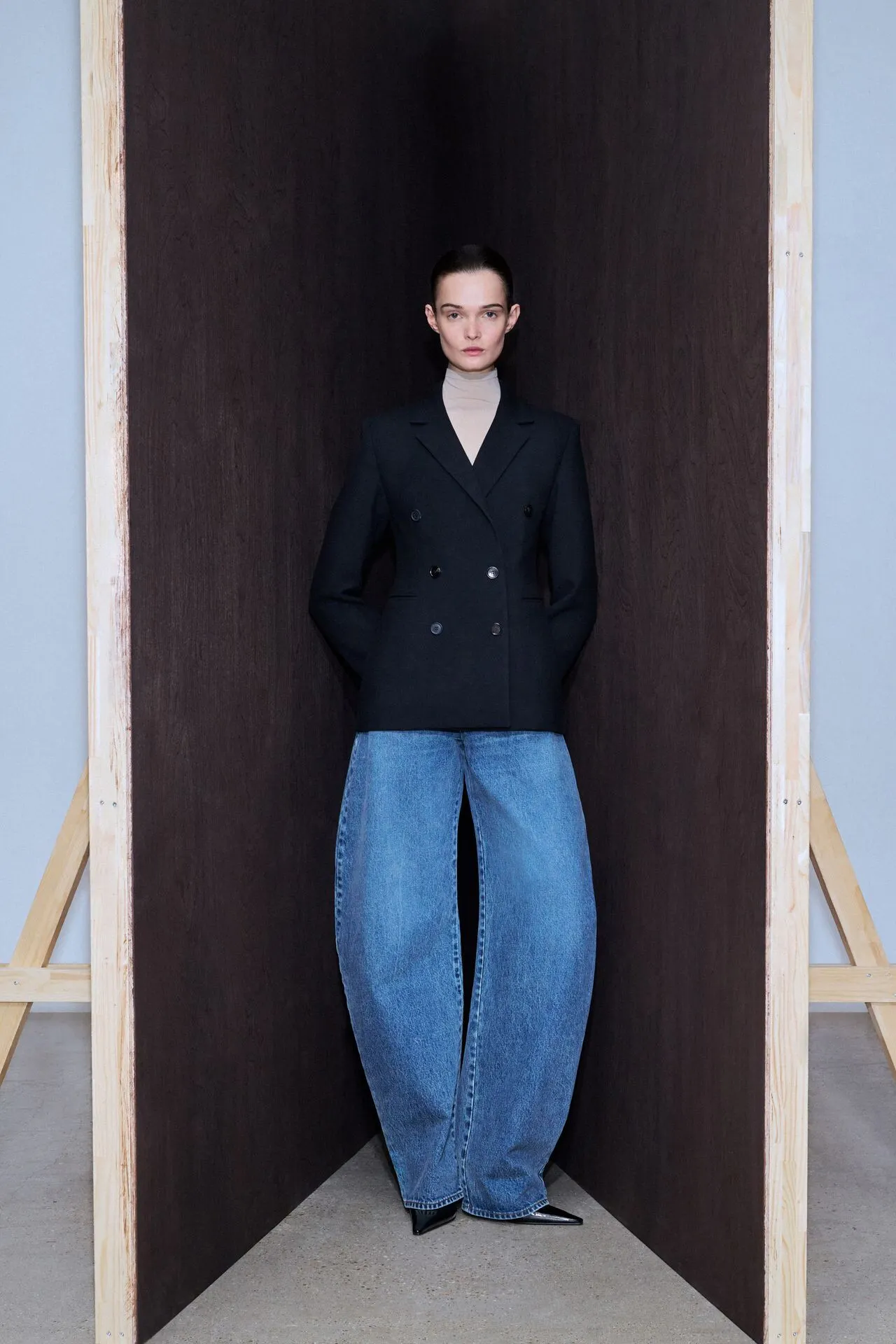
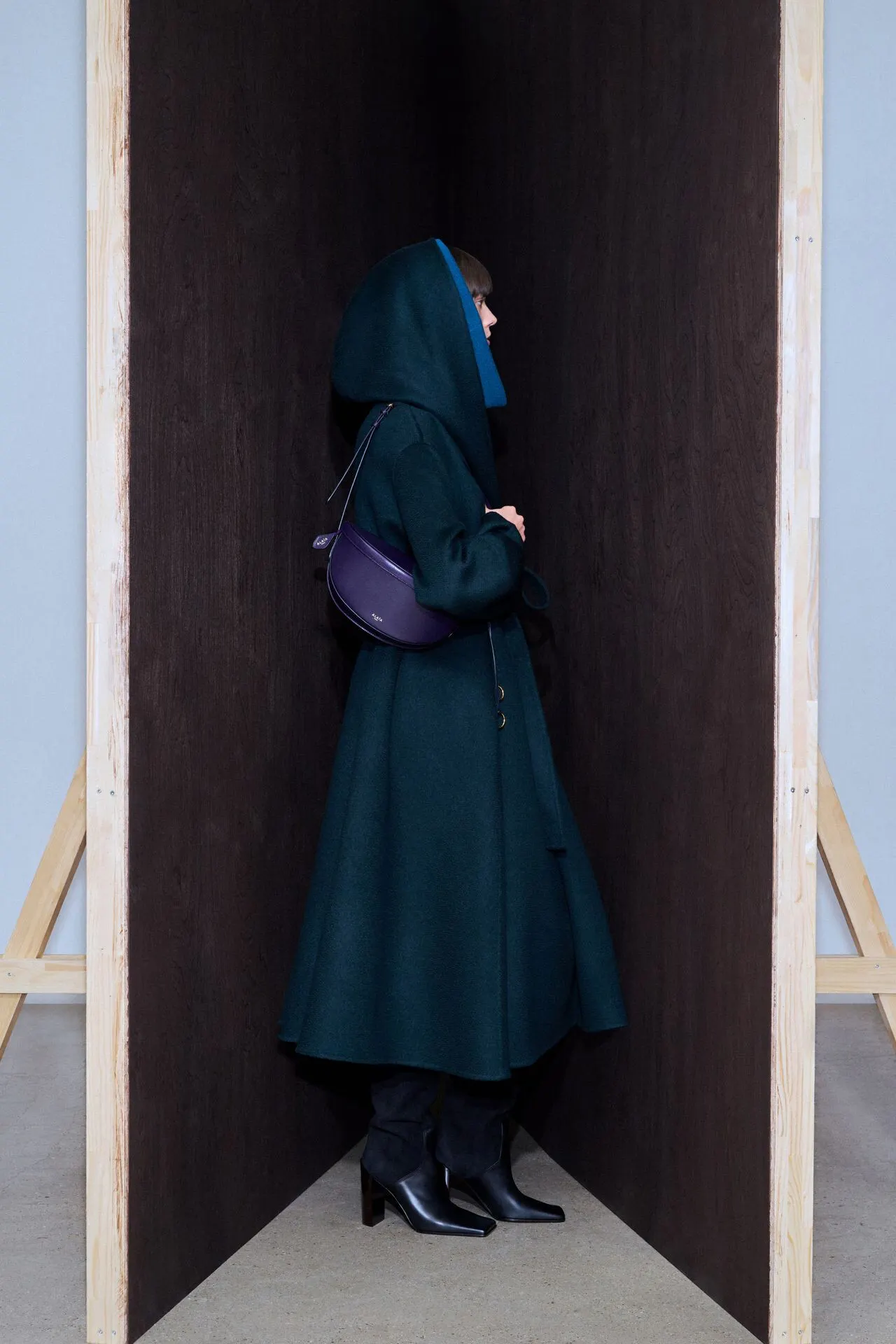
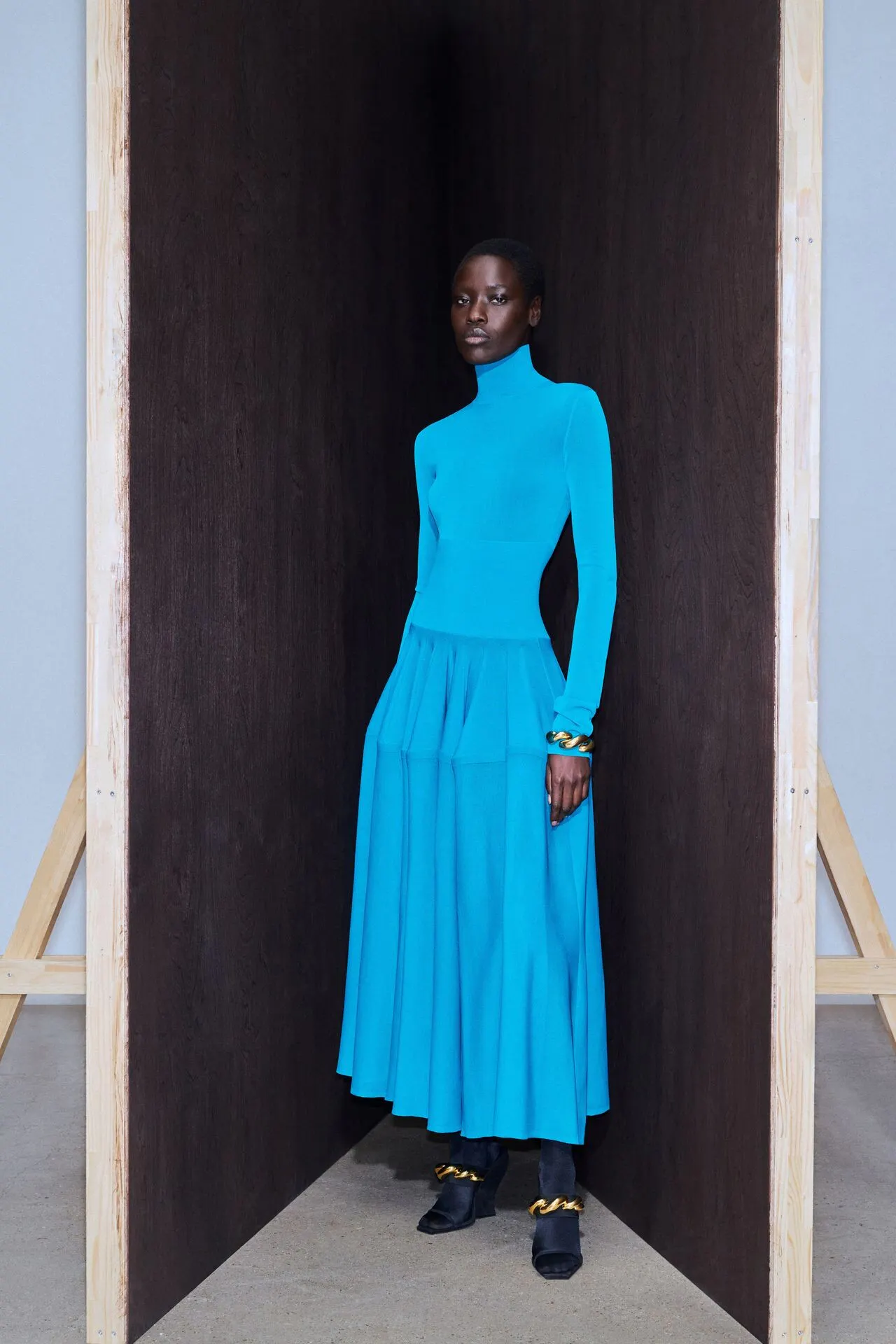
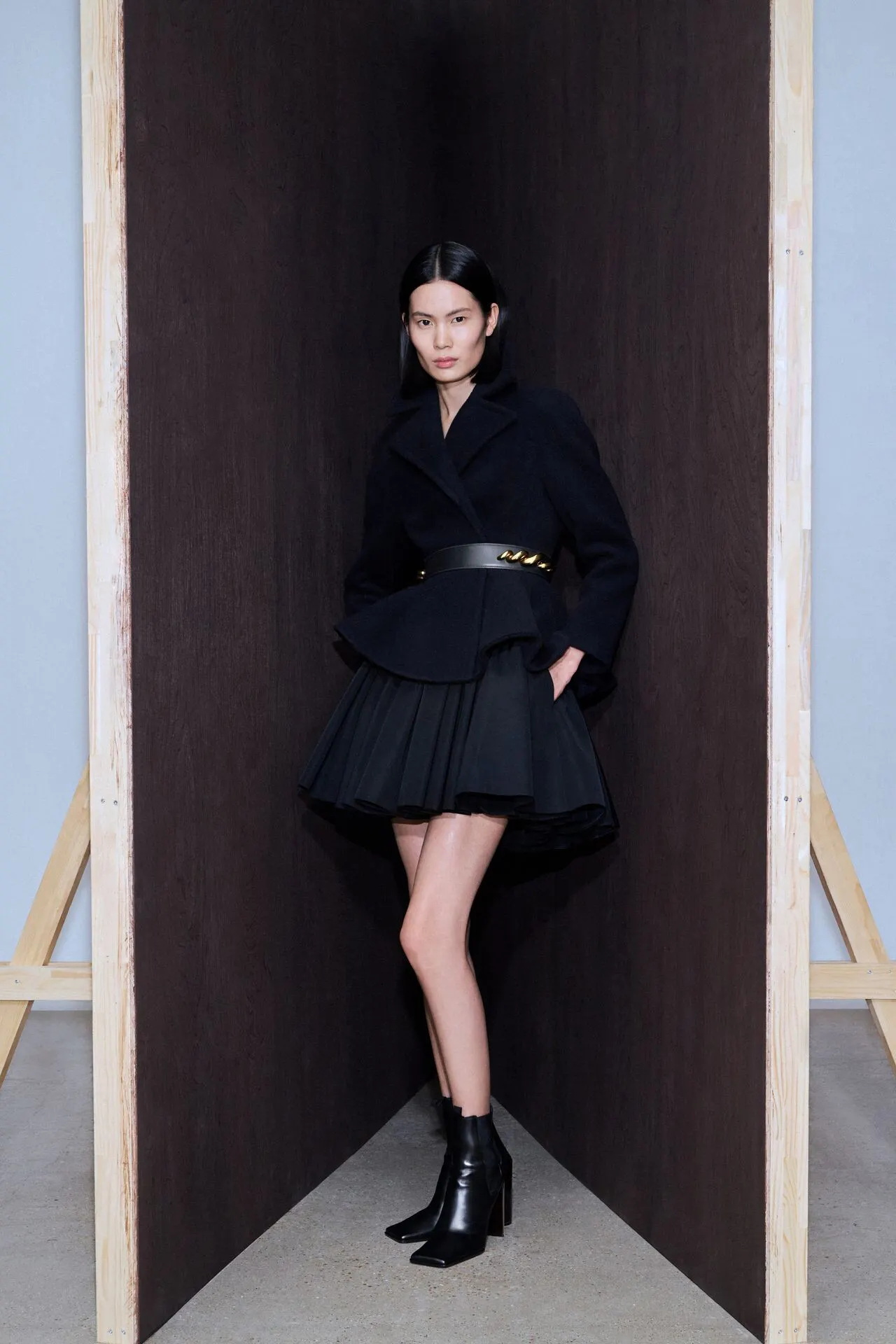
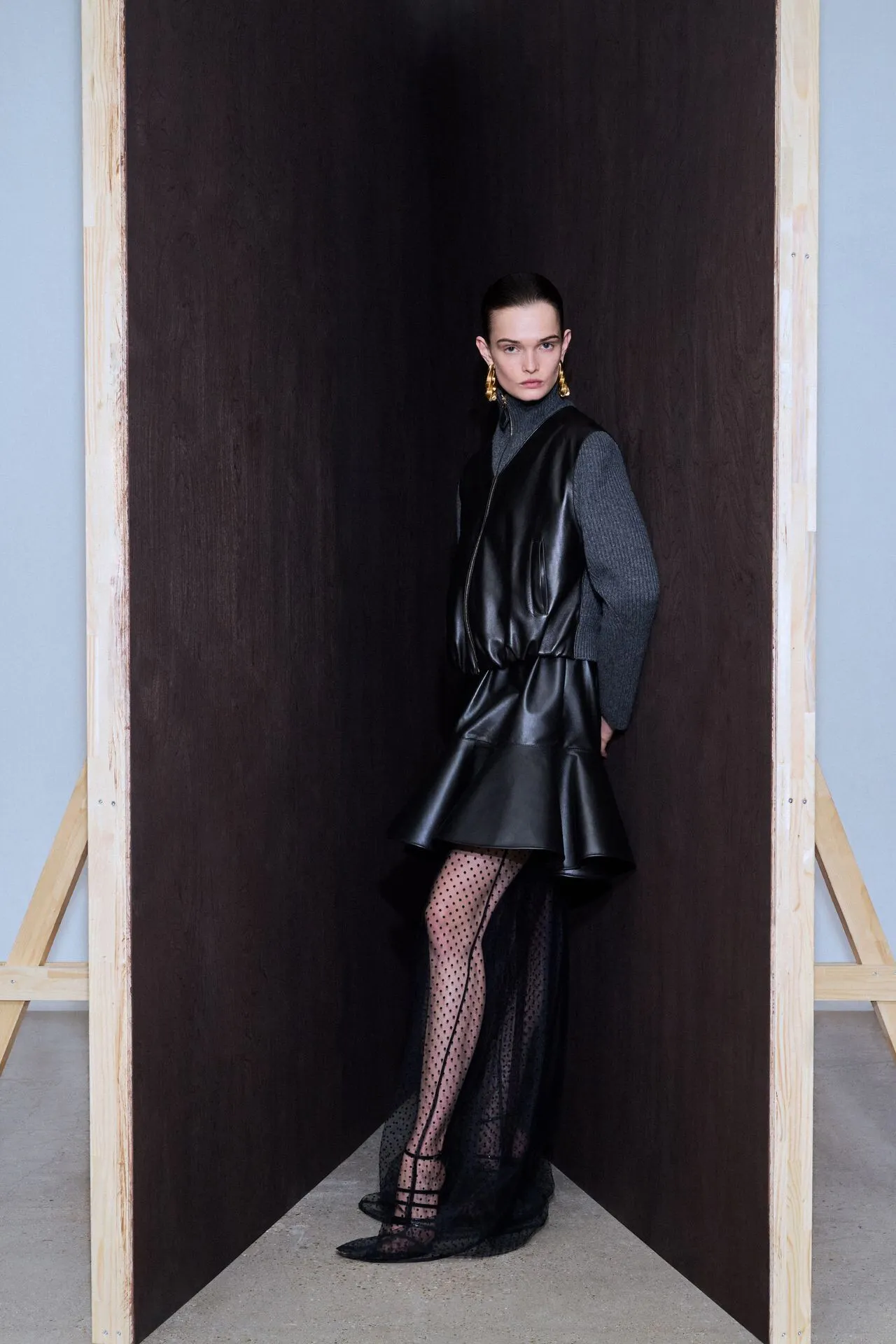
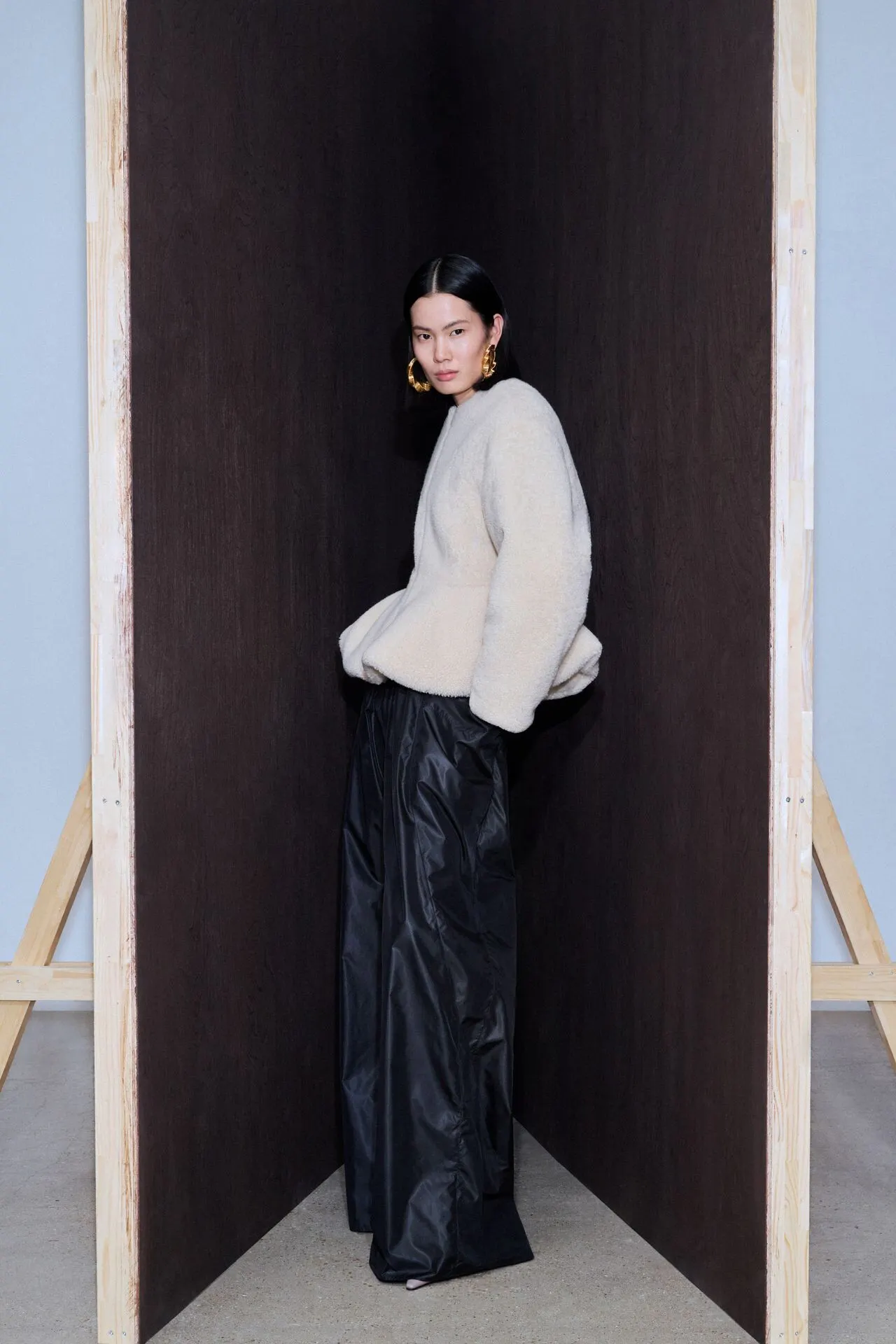
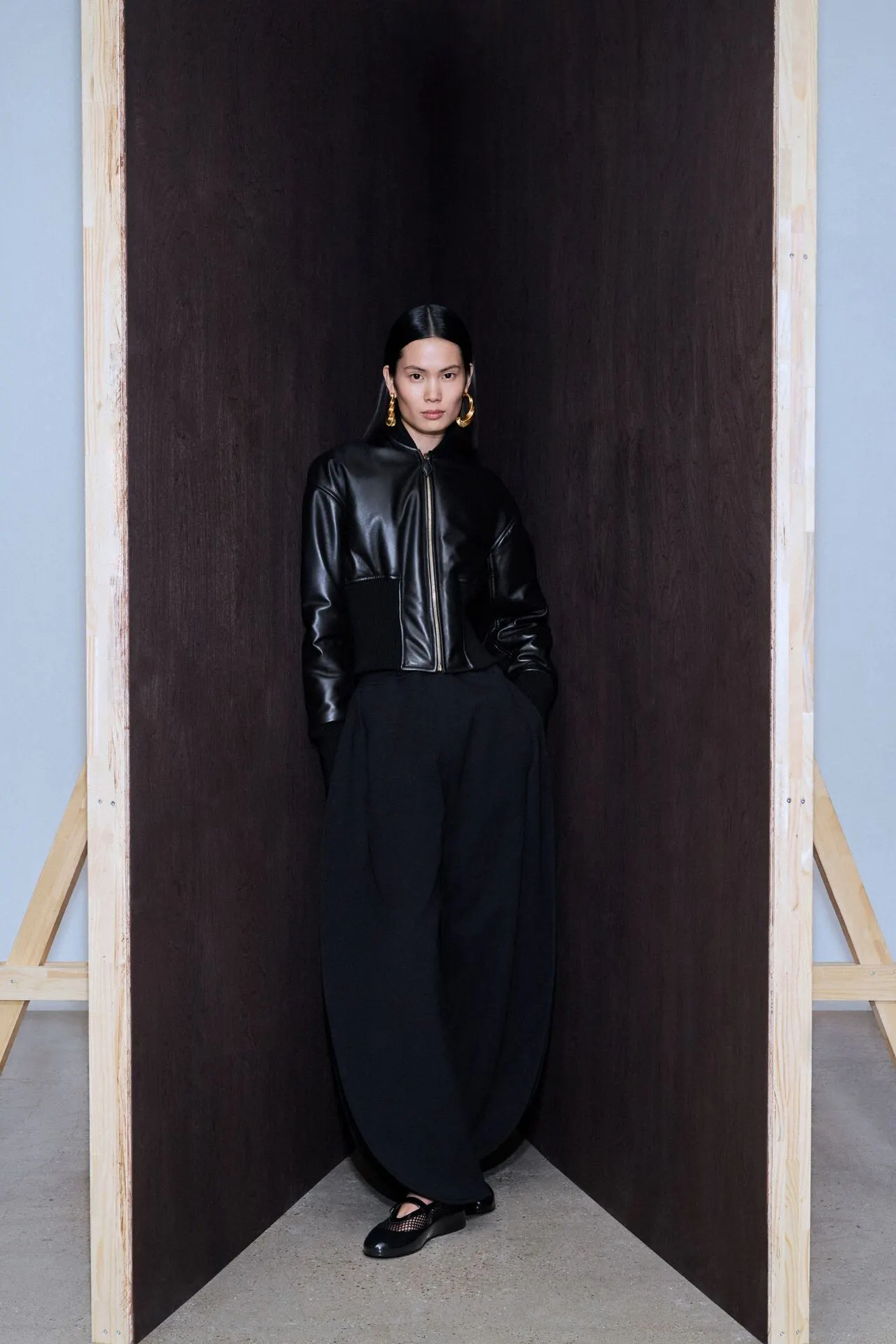
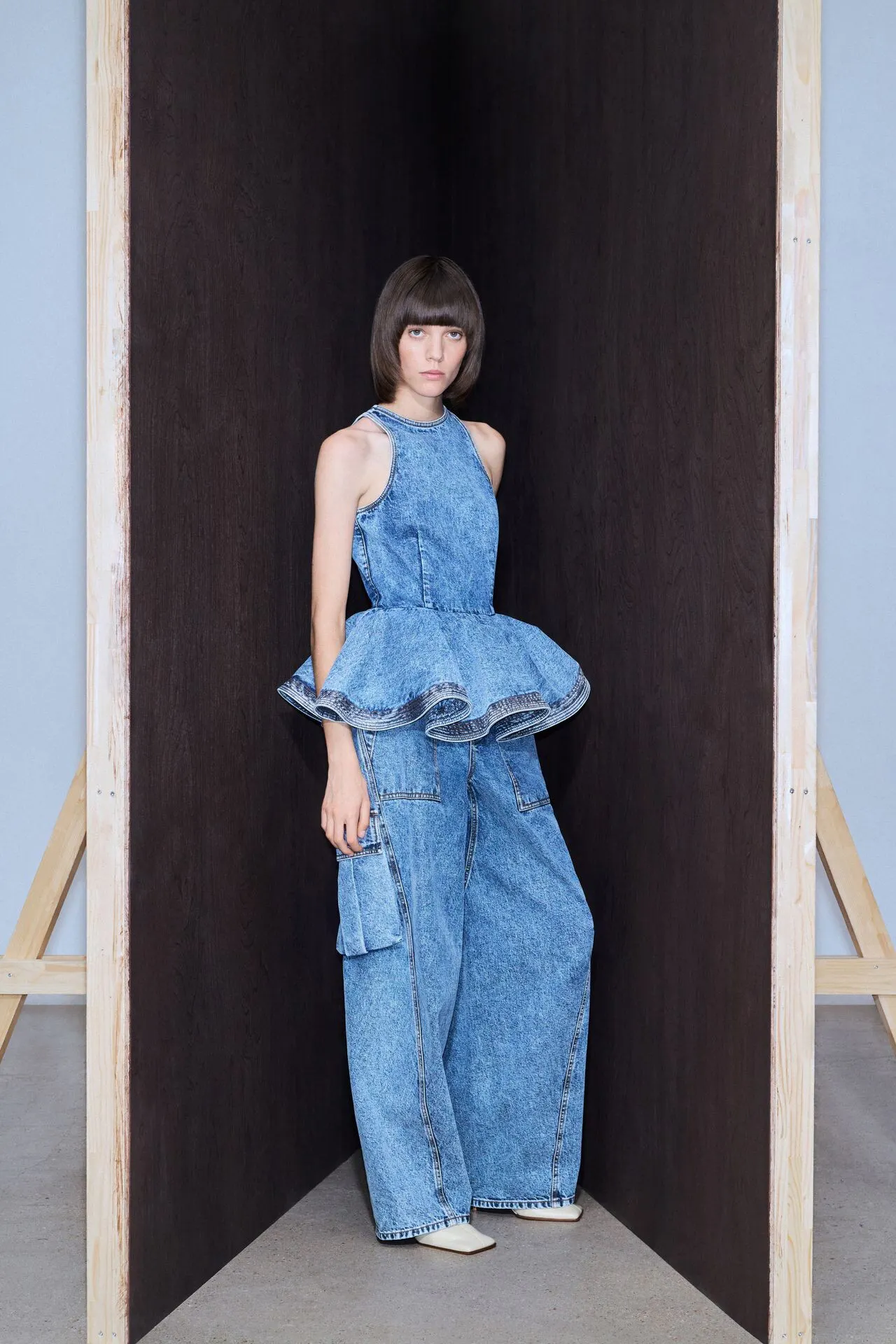
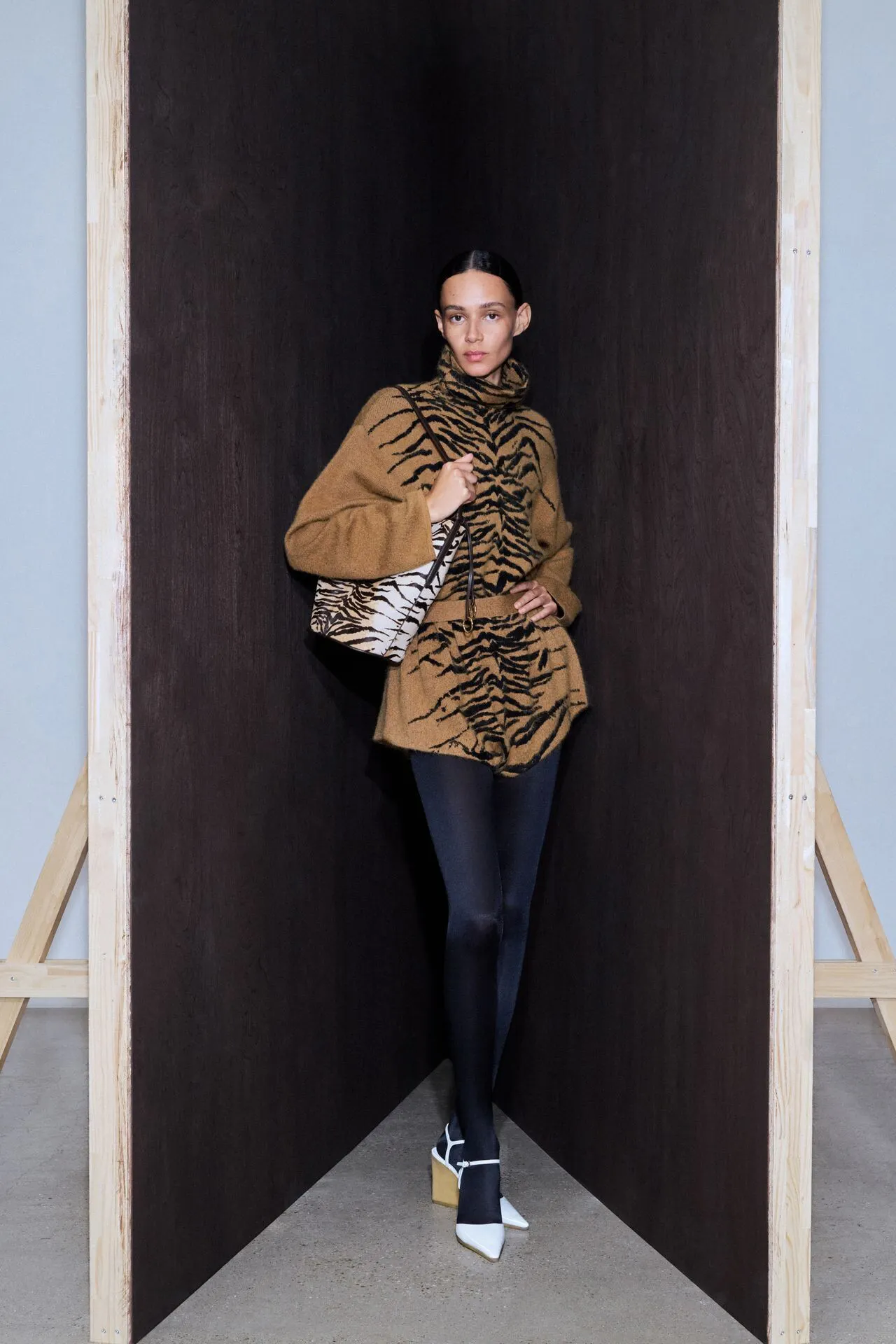
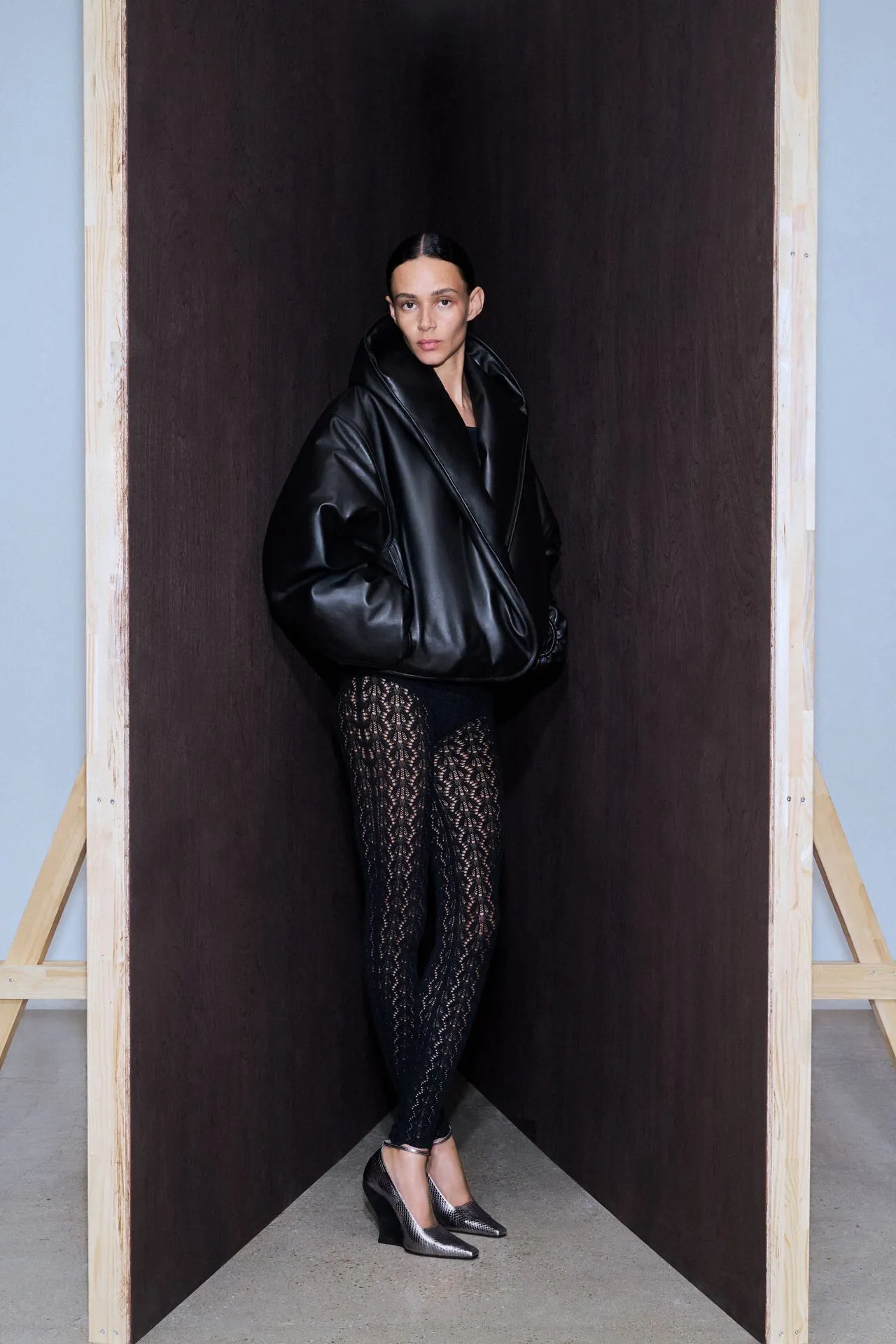
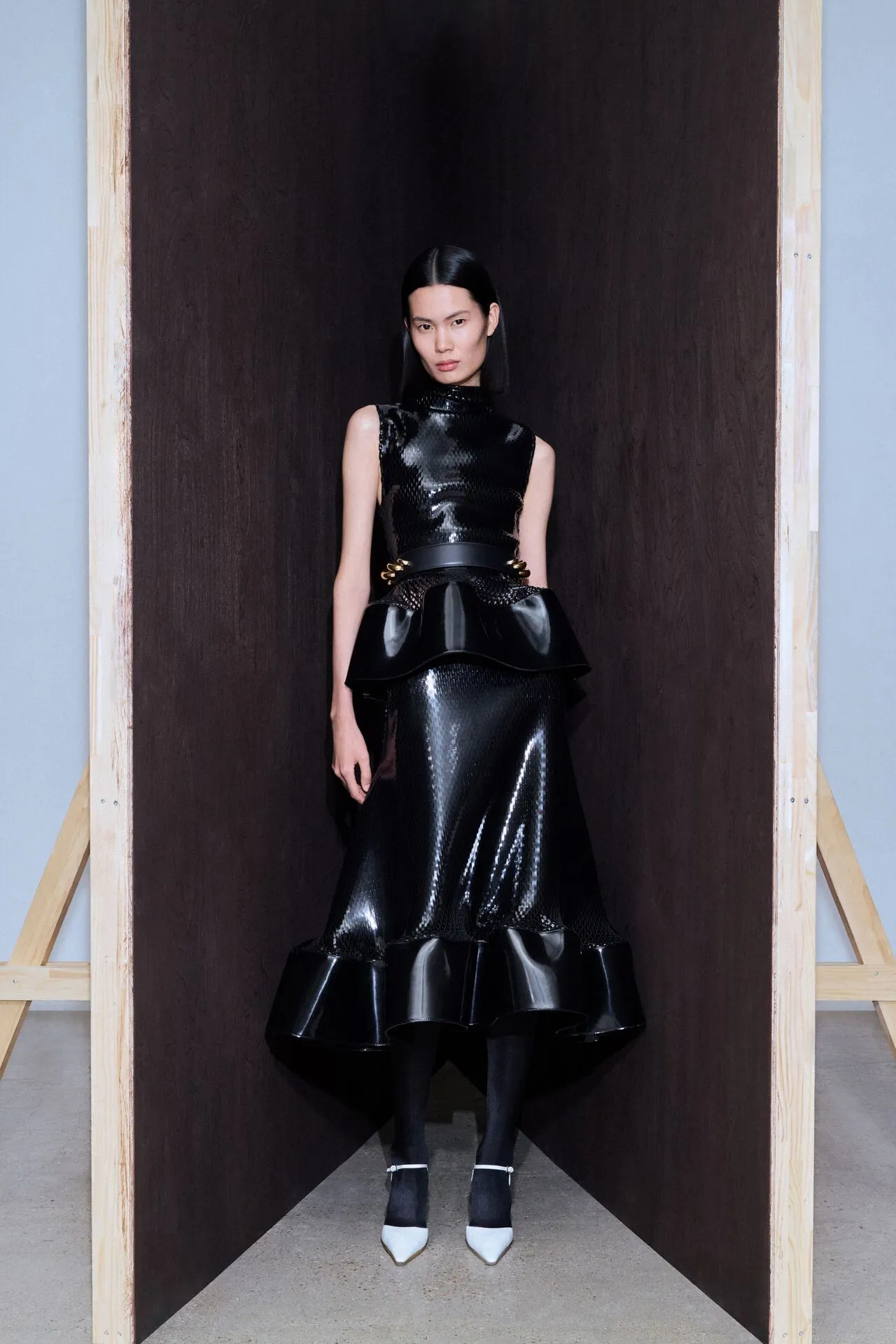
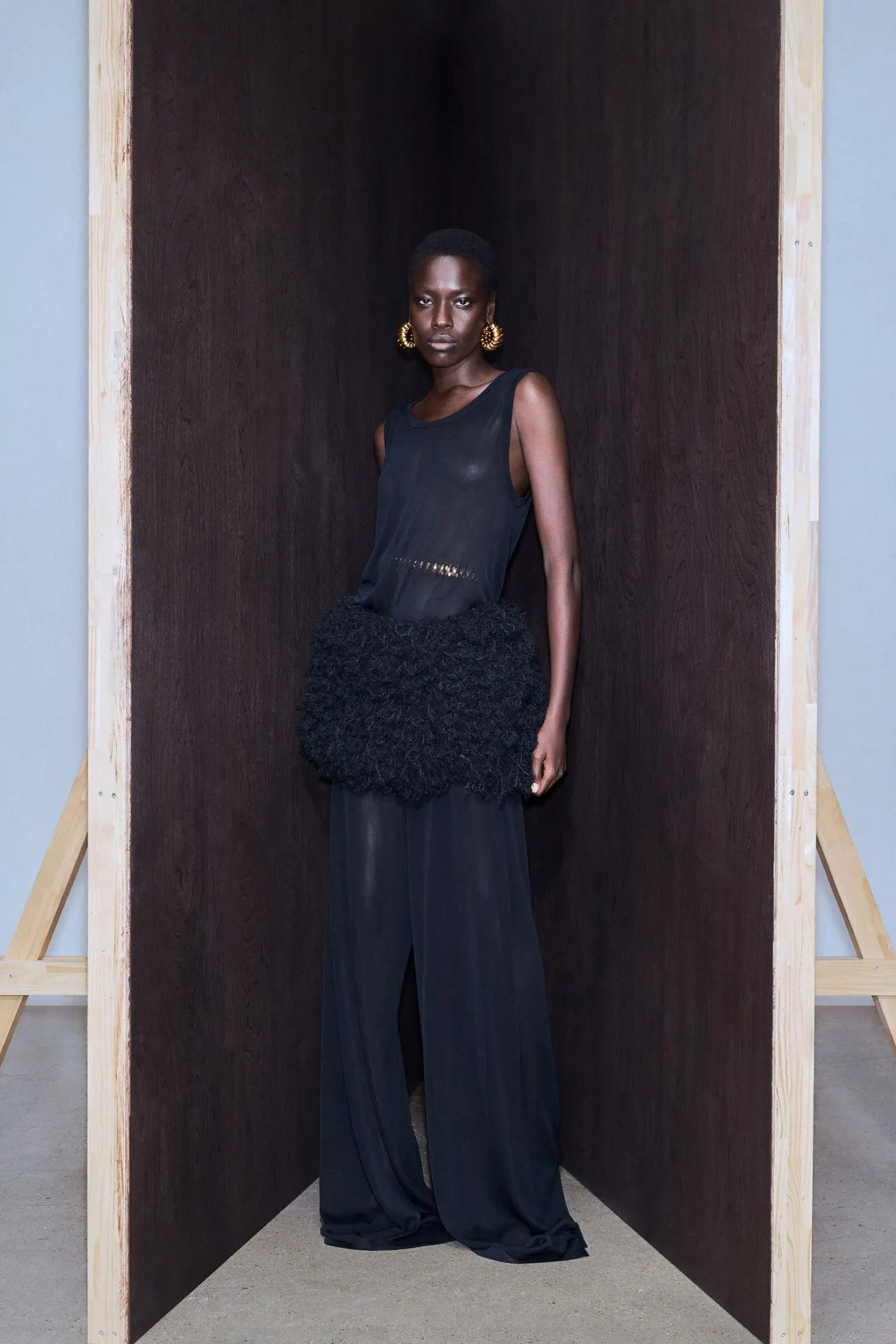
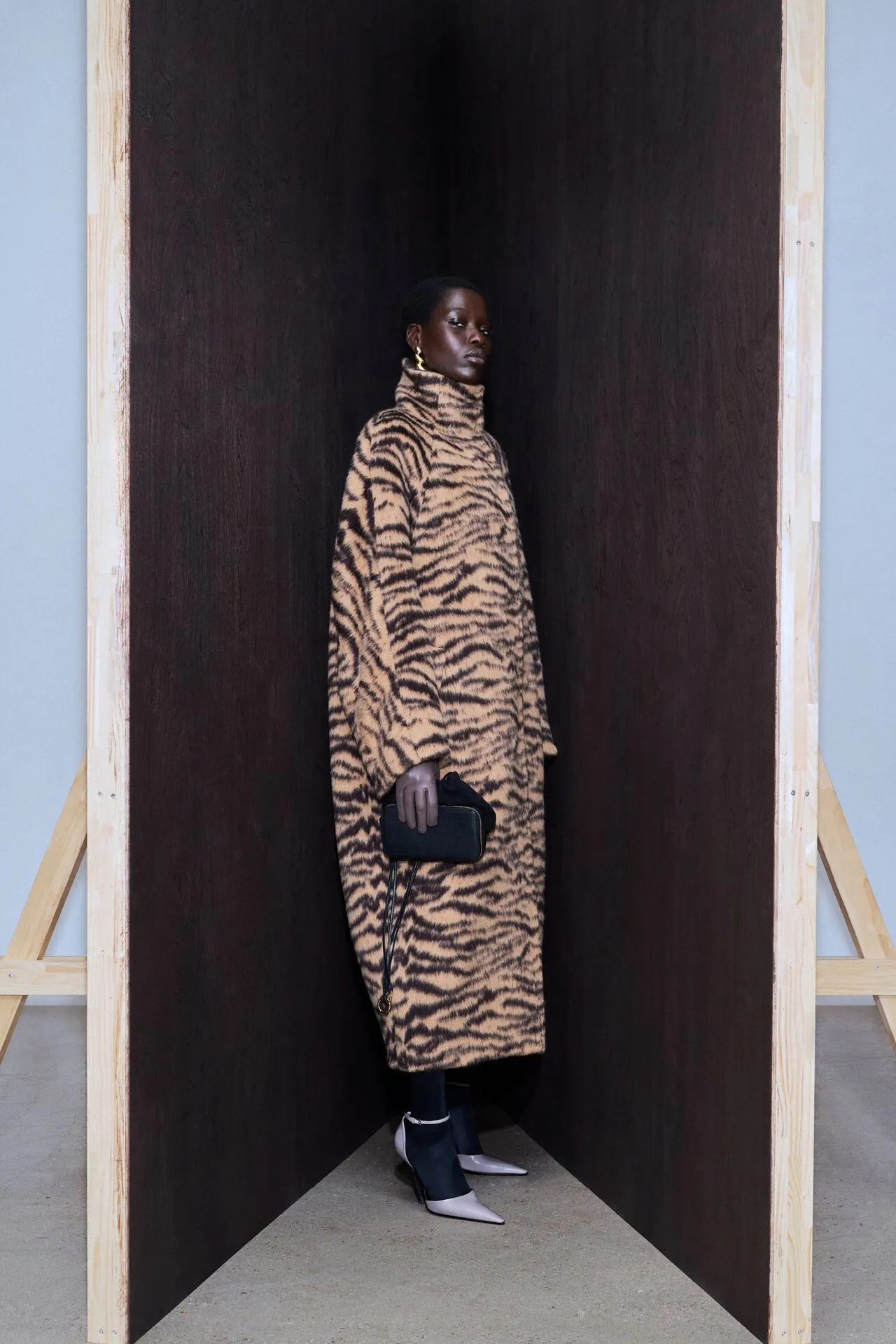
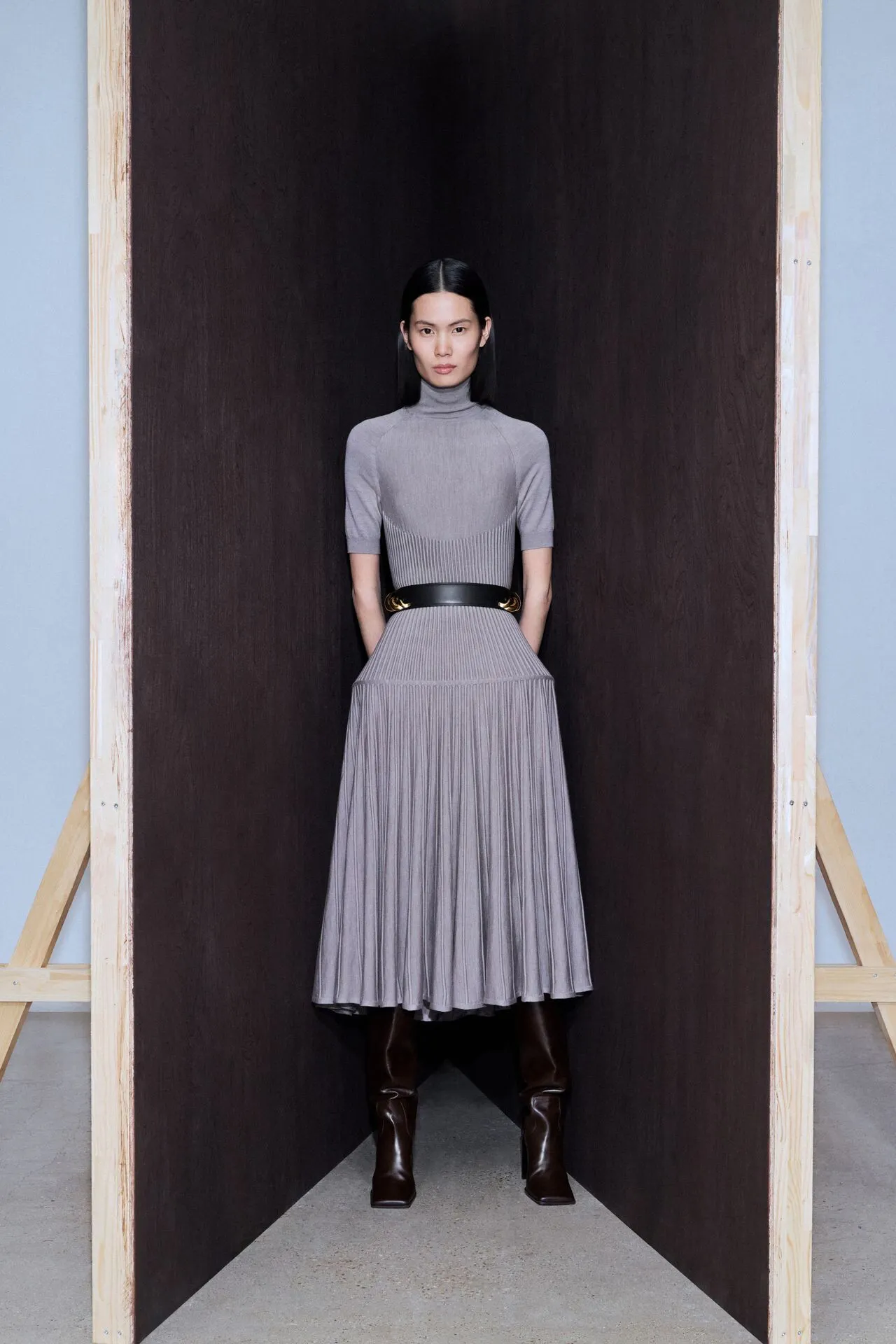
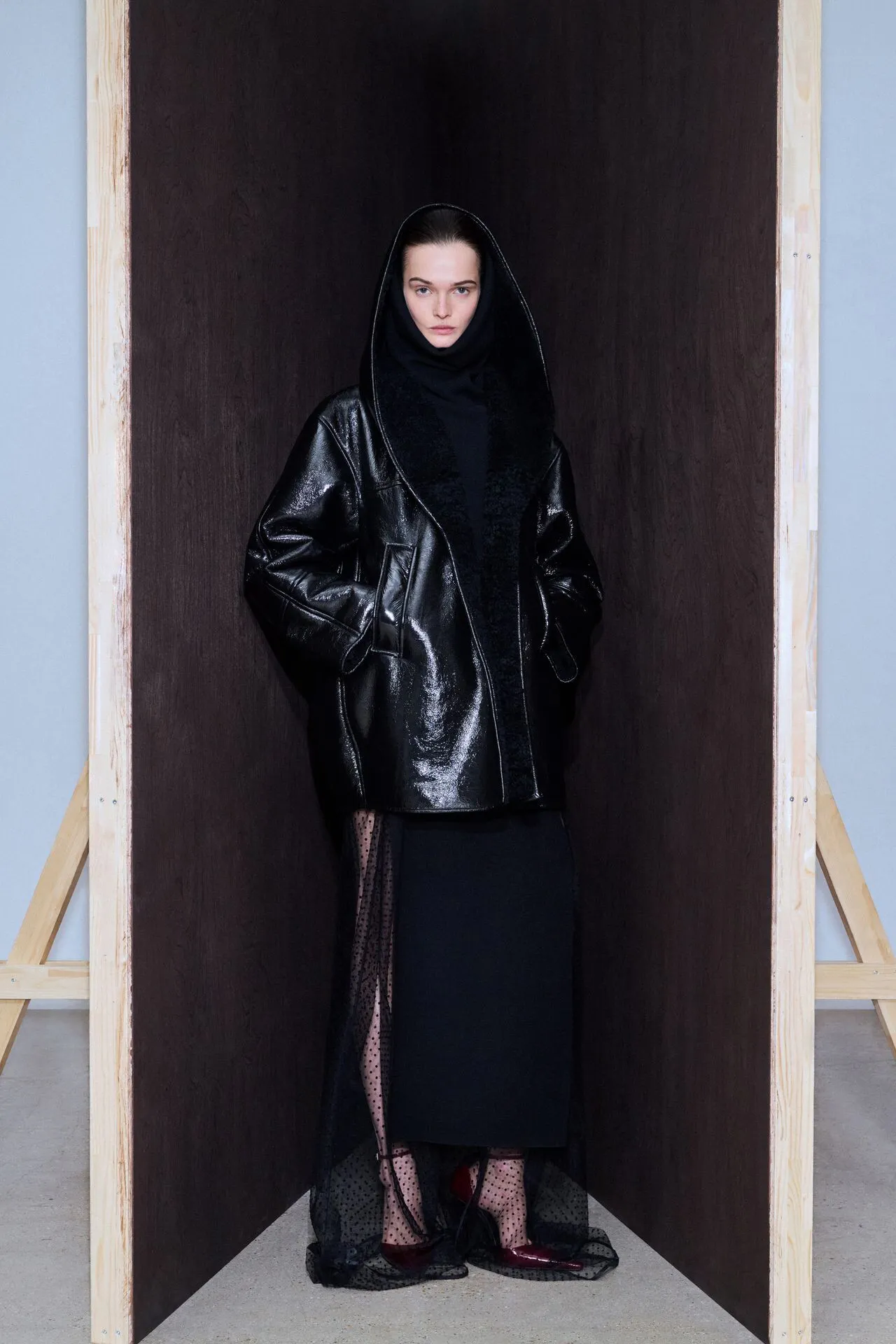
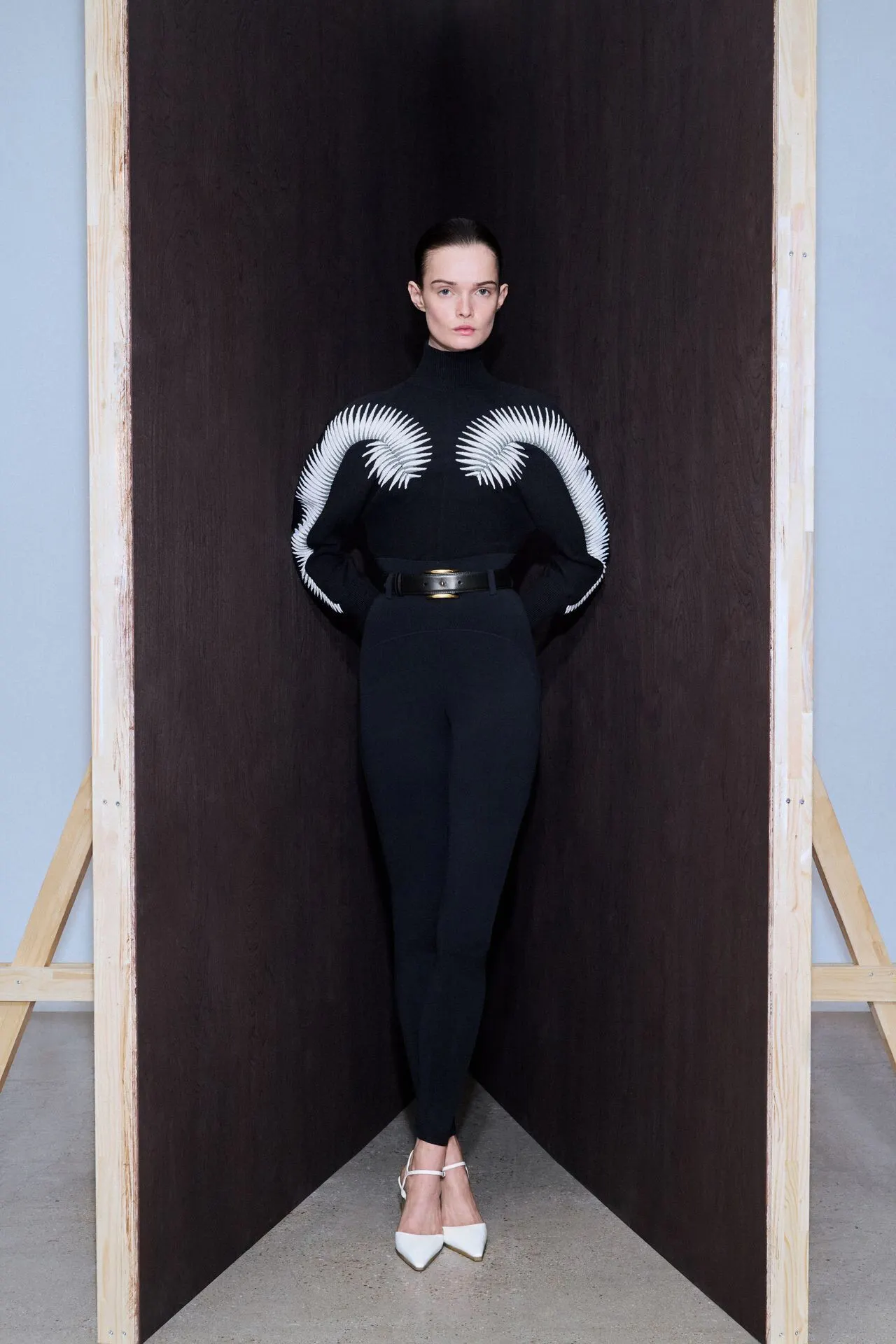
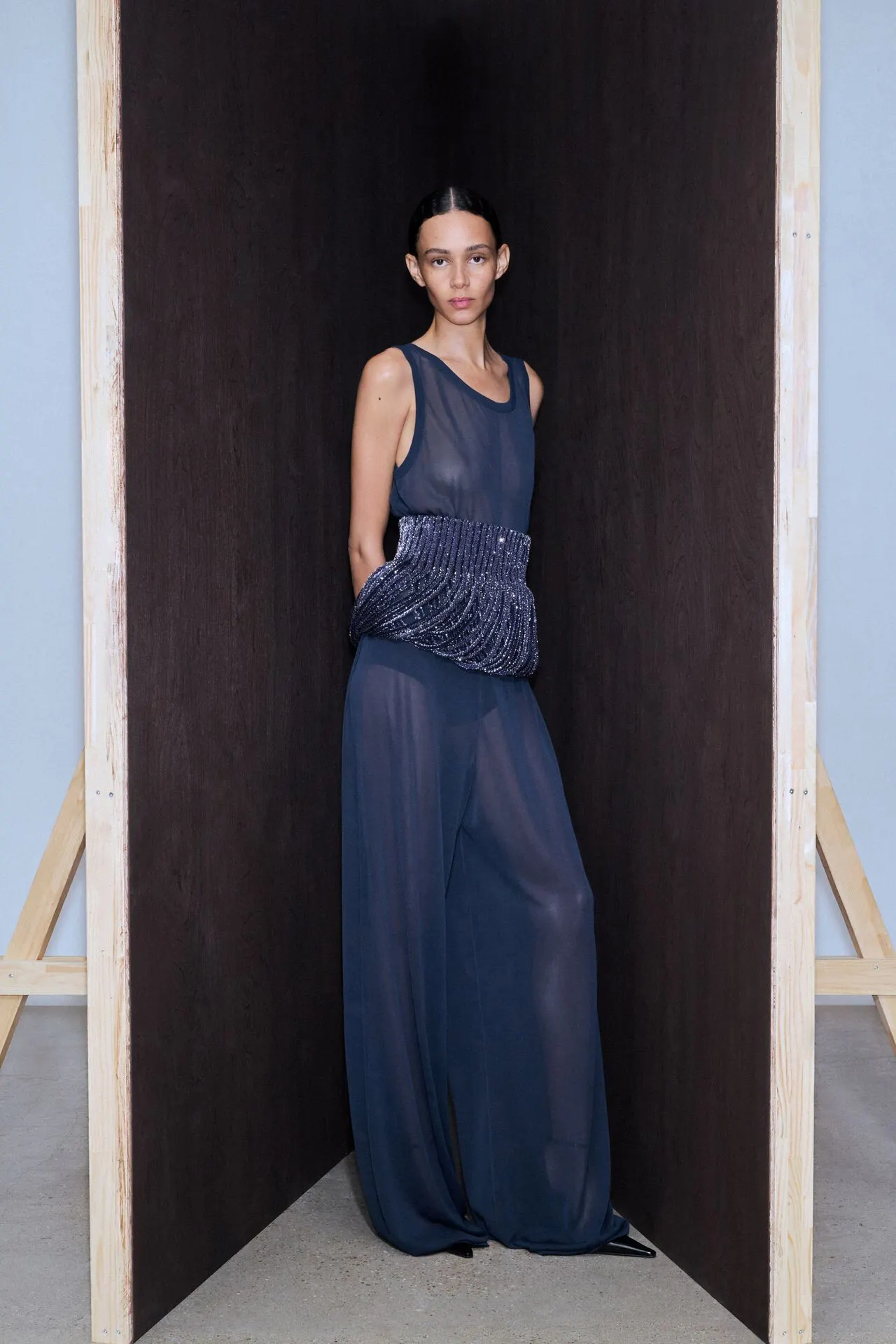
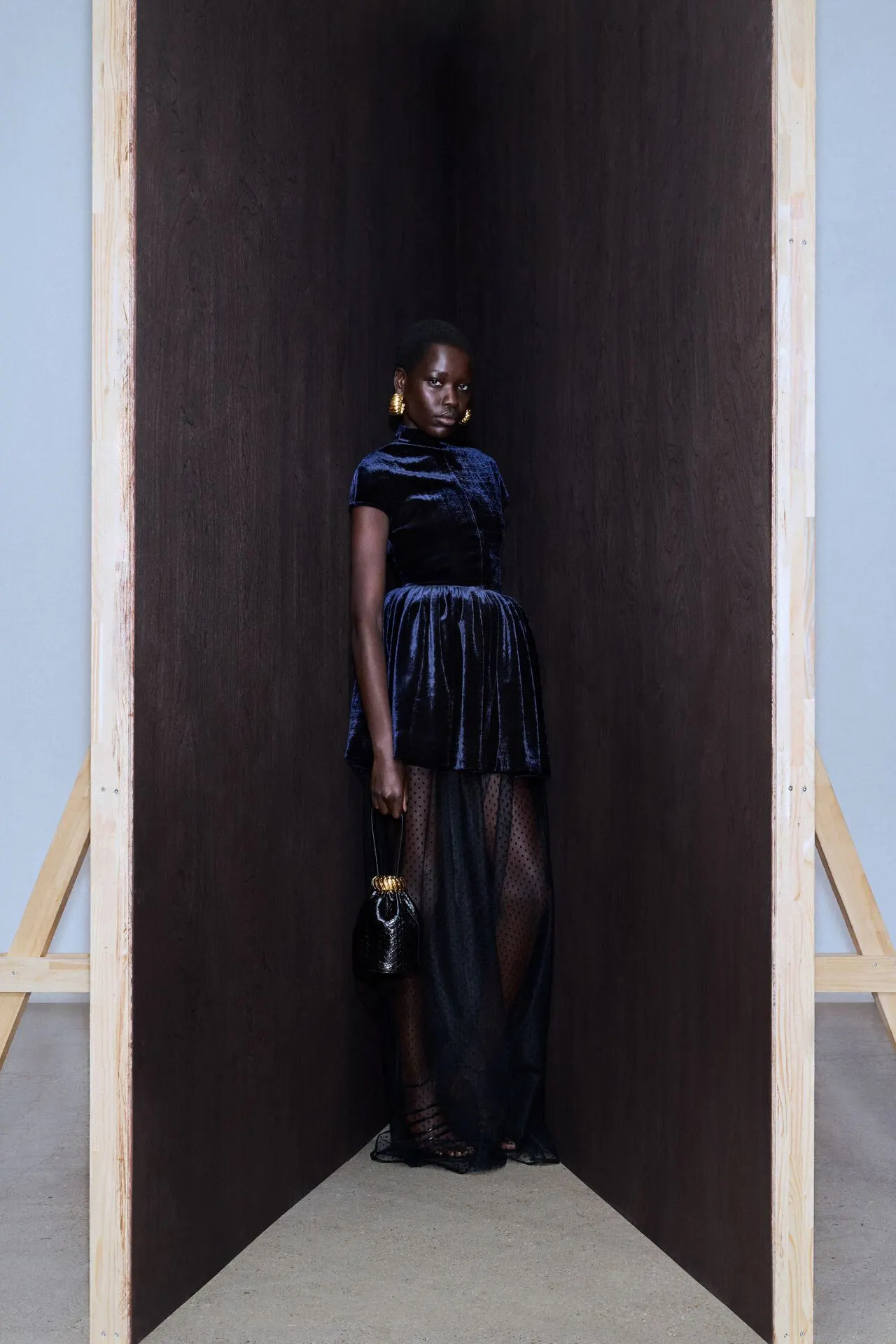
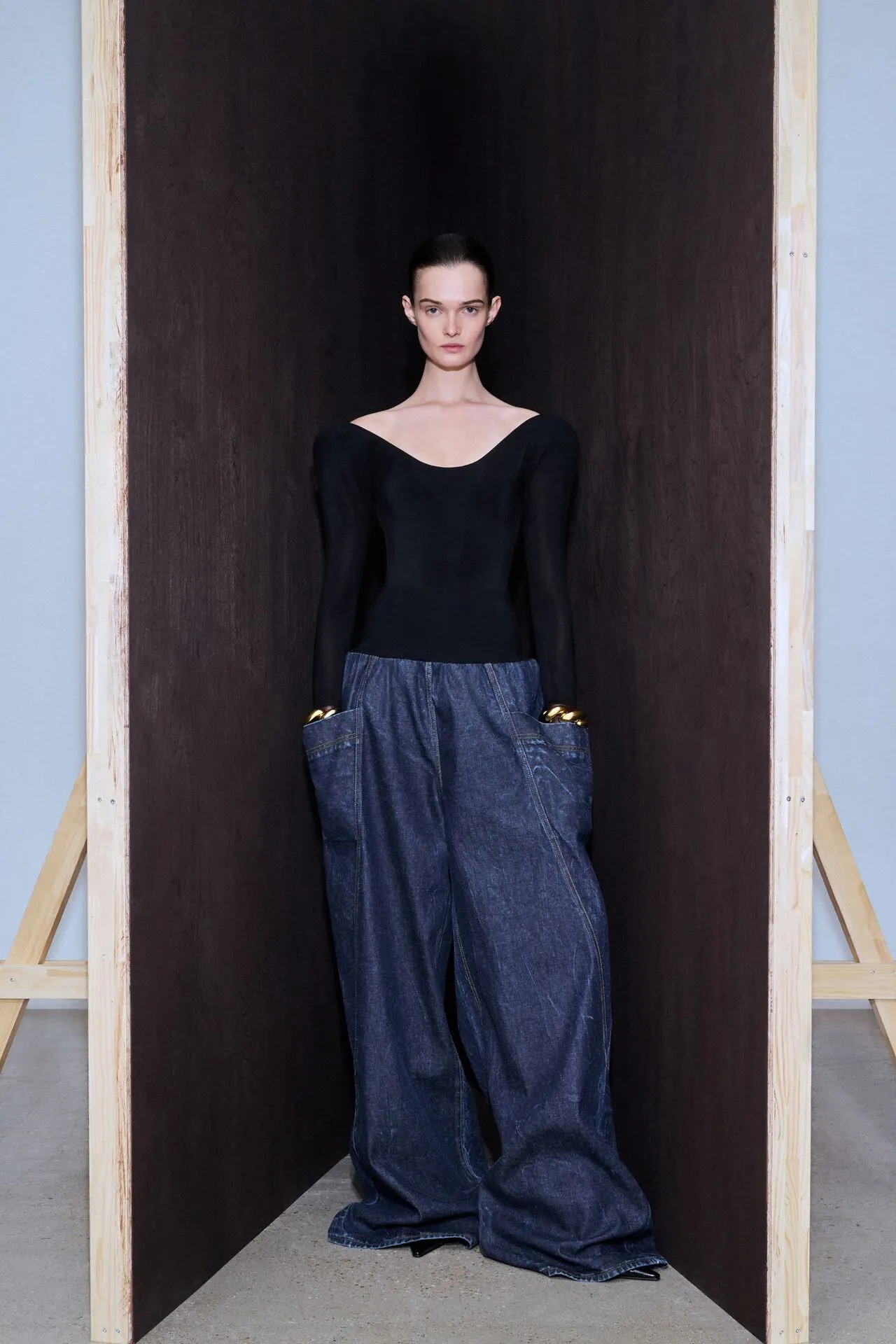
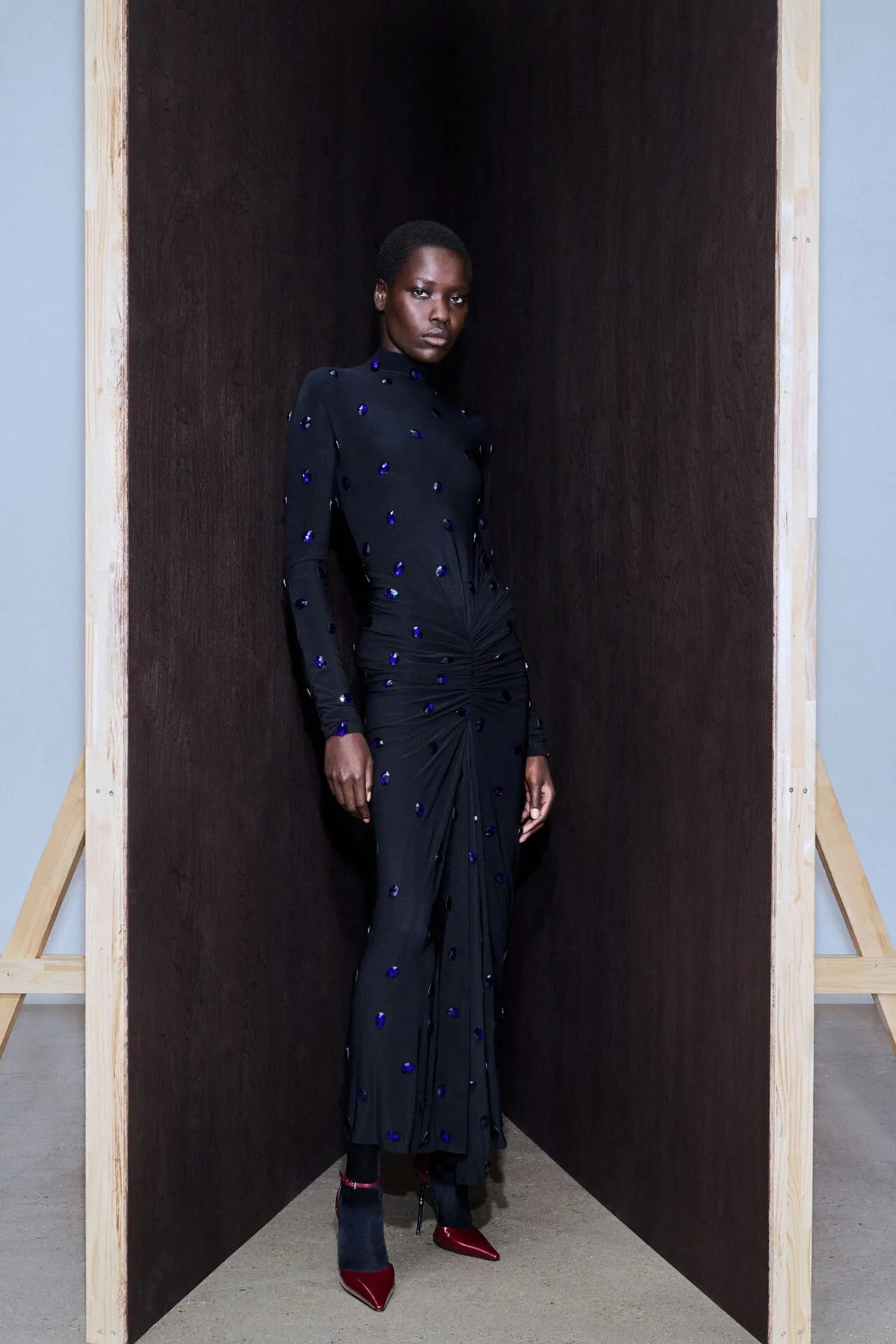
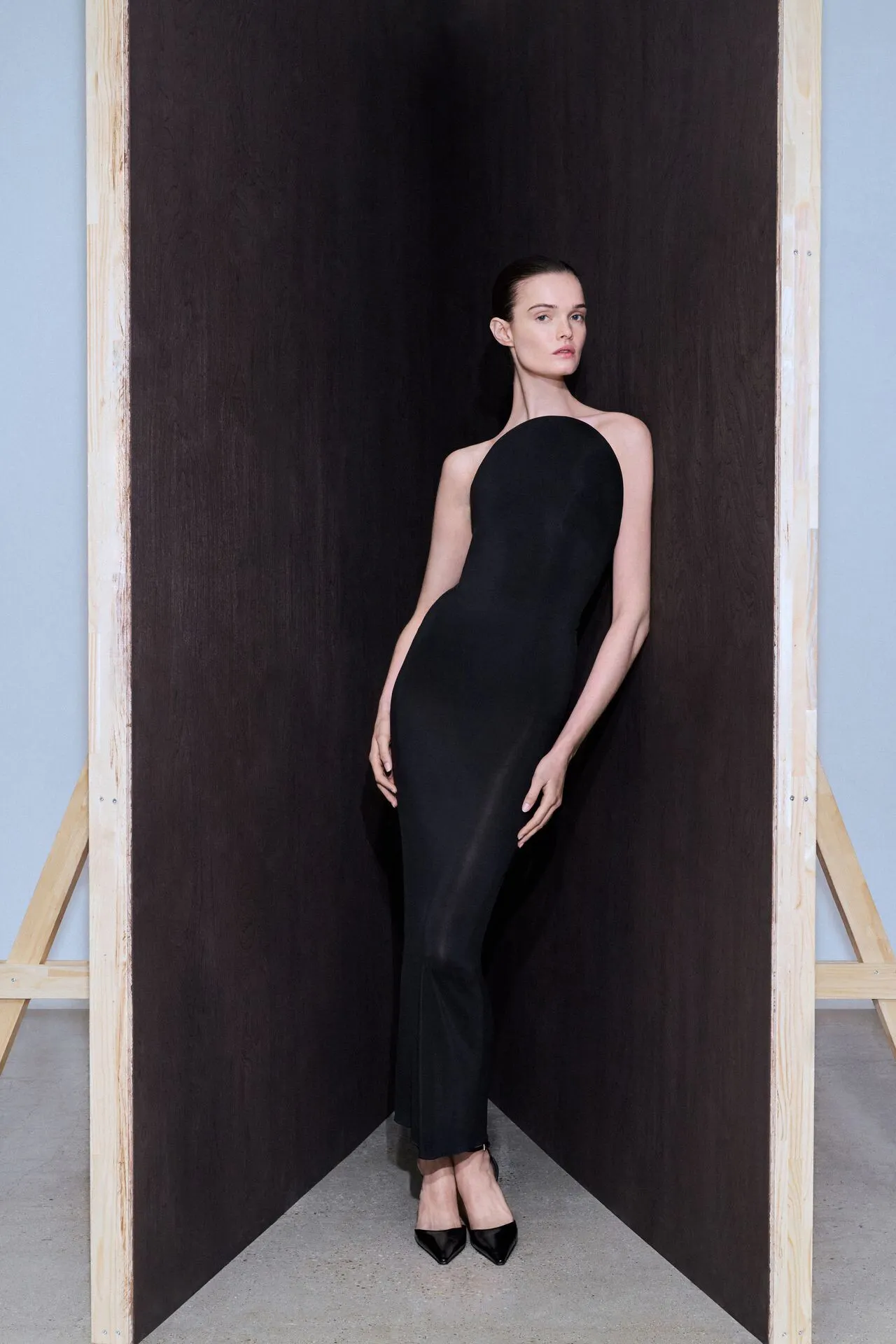
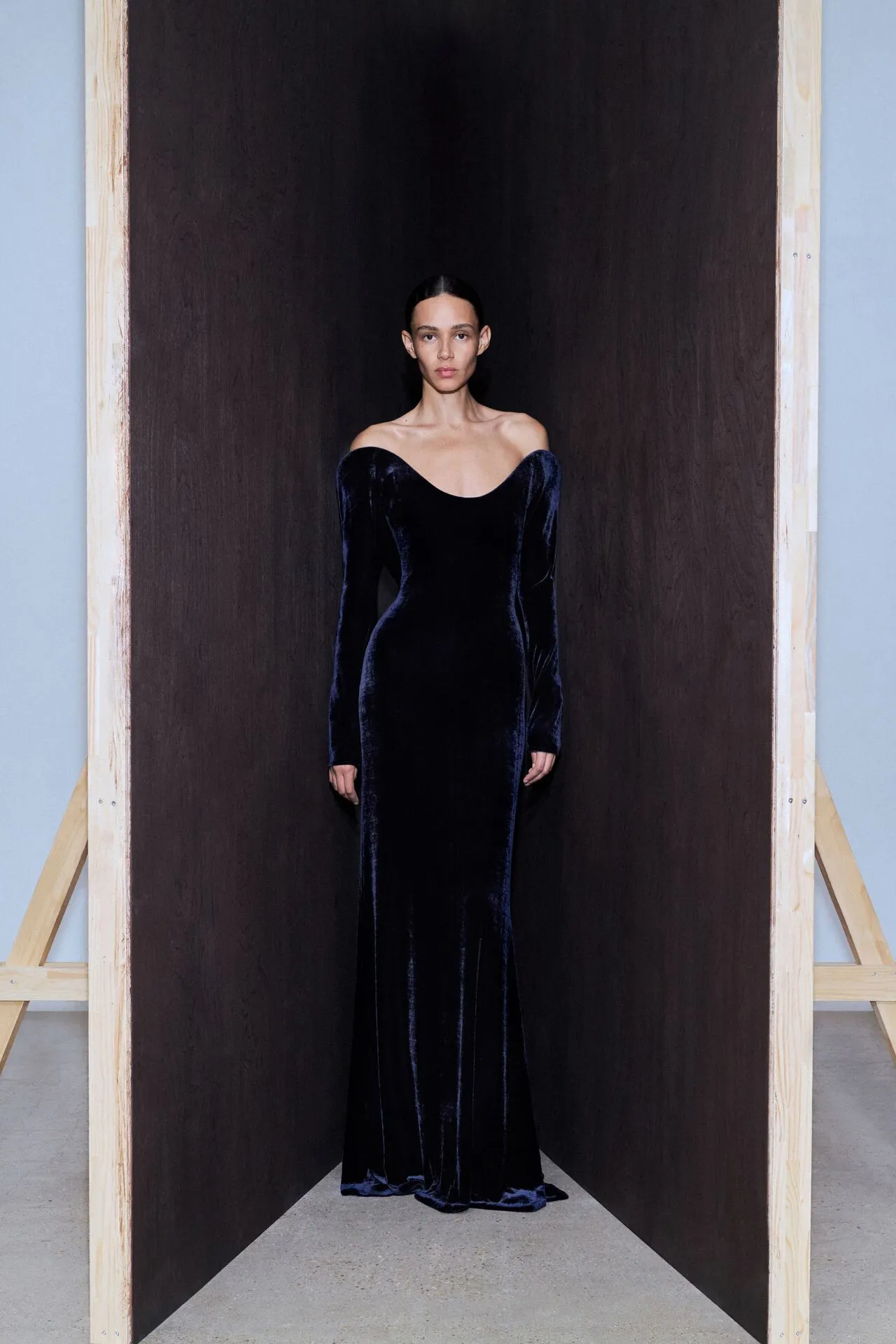
Each model gets filed inside a narrow black-walled recess framed by raw timber, visible screws, diagonal braces, and grey concrete.
This staging clarifies the collection’s central tension. The clothes propose seduction, convention, animal instinct; the photographs align with containment. Bodies are held in a corridor with proportions too narrow for spontaneity.
Wide leather belts recur with heavy gold chain hardware at the waist, the wrist, or the ankle. They are less accessories than chastity devices: each one marks the point at which a loose silhouette must submit to branding. In the best looks, the belt supplies a necessary horizontal break. In the weaker ones, it functions as a luxury command line.
A sculpted bodice, a stiff peplum, a tiered skirt, and another flared hem, all reflect the studio light.
A denim look repeats the problem at a larger scale: a fitted sleeveless bodice, a pronounced peplum, and huge cargo-like trousers in matching washed denim. The construction is visible in the seams and pocket placements, yet the material’s former heritage has been corrupted.
There are subtler failures. A sheer navy tank and wide trousers are interrupted by a heavily beaded silver waist piece, turning the abdomen into a small shrine. A black sleeveless top is paired with a shaggy, inflated skirt over long trousers; the fuzzy volume sits at the hips like a small domestic animal that has been granted diplomatic immunity.
The collection is more fluent when it trusts colour. A saturated cyan knit dress gives the body a continuous, almost graphic field, its high neck and long sleeves making the brightness feel engineered rather than cheerful. A hot-pink satin slip dress is simpler and better: thin straps, liquid surface.
The black-and-white looks are less generous. A fitted black turtleneck carries white rib-like motifs over the shoulders and down the sleeves. The idea is immediately readable, which is also its limitation.
The animal prints perform a similar function. Tiger stripes appear across a high-necked, oversized coat and again across a knit combo with leggings and a matching bag.
A white furry coat reduces the model to nearly featureless, broken only by a rigid brown harness or armor-like panel. A purple leather tracksuit, complete with fur-trimmed cuffs, indulges the pleasure of being overdressed.
Historically, the collection draws from several familiar sources. The velvet columns and satin slips belong to the long history of evening dressing: the body elongated, the neckline negotiated. The tailored jackets, belts, and severe shoulders recall the power-dressing vocabulary of the late twentieth century, when authority was often translated into angularity and controlled waistlines. The sheer dotted layers and minimal slips point toward the 1990s, while the giant denim, nylon trousers, and leather sportswear borrow from the recent conversion of utility clothing into luxury costume.
The shoes reveal the same commercial intelligence. Pointed pumps, square-toed boots, slingbacks, high heels, and sandals repeatedly sharpen the looks. They are generally effective because they restore a clear line to silhouettes that otherwise risk becoming swollen. Yet the footwear also exposes the collection’s imagined social role. These women are dressed for controlled floors: gallery concrete, hotel marble, car interiors, private rooms where nobody is expected to run.